Wednesday, April 13, 2016

1783: The first experiments using oxygen

So oxygen had been discovered by three men -- Wilhelm Scheele, Joseph Priestly, and Antoine Lavoisie -- all three unaware that the other was working on the same thing.  They all had different theories regarding it, and they all gave it a unique name -- empirial air, dephlogisticated air, and oxygene.

So the race was on to learn more about this substance, and what therapeutic benefits one might receive from inhaling it.

Stephen Hales created a device he called a pneumatic trough that he used to collect both carbon dioxide and oxygen, and now he was certain that plants obtained their nourishment from this air. (4, page 193)

Henry Cavendish (1731-1810)
The first reported experiments using oxygen on humans was done in 1783 by Francois Chausier, a surgeon and anatomist, and also a professor of obstetrics in Paris. (2)

What he did was prescribe intermittent inhalations, for about 2-3 hours each day, for his patients with consumption to see if it would relieve their dyspnea. (2)

Similar experiments were performed by a French physician named Caillens.  He gave a young woman with consumption daily inhalations of oxygen, of which he said she greatly benefited. (8)

He also gave oxygen to an asphyxiated newborn baby in 1780, and also described giving mouth to mouth respirations to them. (2)

Joseph Priestly, the man given credit for the discovery of oxygen (what he referred to as dephlogisticated air) was a member of the Lunar Society of Birmingham, along with Josiah Wedgewood, Erasmus Darwin, and James Watt. It was a society whose members met each month under on the night of the full moon to discuss the transfer of scientific knowledge to industry. (8)

It may have been through the friendship formed through these meetings that Darwin and Watt learned of the benefits of "dephlogisticated air" from Priestly. (8)

Darwin became interested in "dephlogisticated air," although, after reading the works of Lavoisier, used the name "oxygen" in his famous book of poems called "The Botanic Garden" in 1791.  Some say it was because of this book that the name Oxygen became the official name of the element.

Realizing the potential benefits of oxygen, and probably that a profit could be made, Thomas Beddoes decided he wanted to open up a clinic that would allow patients to pay to inhale this air a few hours every day.

Perhaps inspired by what he learned from is friend Priestly, Watt joined Beddoes, inventing some of the equipment that was essential for the project to work.  They were also joined by Humphry Davy, who also made significant contributions to the project.

With the help of his friends, Beddoes opened the "Pneumatic Institute" in Bristol, England, in 1798. (8) (9, page 20)

Francois Chaussier (1746-1848)
This was the first of what would later be referred to as oxygen parlors, which became common in the 19th century.

Beddoes devised a system where any amount of oxygen could be added into the atmosphere of small compartments.  A patient would spend a certain amount of time in these compartments breathing supplemental oxygen.

Beddoes, Watt and Davy did not advertise that the inhalation of oxygen would cure anything.  The insisted their project was an experiment, and that oxygen might be beneficial as a treatment for obstinate ulcers, leprosy, spasms, cancer, dropsy, hydrocephalis, headache, poisoning by opium, paralysis, scofulous tumors, scorbutus, venereal, deafness, white swelling, melancholy, general dibility, continued fever, intermittent fever, and coldness of the extremities, consumption, palsy, heart failure, and asthma.  (2, page 281) (8) (9, page 20)

Thomas Beddoes (1730-1810) is often
considered the father of respiratory therapy.
Yet despite the therapeutic experiments of Beddoes, oxygen was not generally accepted by the medical community, perhaps mainly due to the fact there were not efficient and inexpensive devices for making it and delivering it to the patient.  (2, page 281)

Of course there was also no experiment that proved without a doubt the benefits of using it either.  (2, page 281)

And, considering the crude nature at which oxygen was made, chances are patients did not receive much more oxygen than what was in the air, which is 21%.  Some speculate that patients received 23-28% oxygen. (8)

The institution was converted into a hospital during an epidemic of typhus in the fall of 1800, thus ending the experiment. (8)

After Beddoes, oxygen wasn't used therapeutically again until a cholera outbreak in 1832, and the study of it not continued until John Haldane took it up again a century later. (2, page 281)

References:
  1. Gray, Alonzo, "Elements of Chemistry:  Containing the Principles of the Science, both experimental and theoretical," 1840, Massachusetts, page 118
  2. Brainbridge, William Seaman, "Oxygen in Medicine and Surgery -- a contribution with report of cases," New York State Journal of Medicine, 1908Vol. 8, June, No. 6, pages 281-295
  3. "Carbon Dioxide,"  Scienceclariied.com, http://www.scienceclarified.com/Ca-Ch/Carbon-Dioxide.html#b, observed the site on May 4, 2012 (this information is available at a variety of sources, although I chose to give sciencedaily.com credit)
  4. Magner, Lois N., "History of Life Sciences," 2002, 3rd edition, New York, Marcel Dekker
  5. Hill, Leonard, Benjamin Moore, Arthur Phillip Beddard, John James Rickard, etc., editors, "Recent Advances in Physiology and bio-chemistry," 1908, London, Edward Arnold
  6. Fruto, Joseph S, "Proteins, Enzymes, Genes: The Interplay of Chemistry and Biology," 1999, New York, Yale University
  7. Blakeman, Thomas C., "Evidence for Oxygen Use in the Hospitalized Patient: is more really the enemy of good," Respiratory Care, October, 2013, volume 58, number 10, pages 1679-1693
  8. Grainge, CP, "Breath of Life: the evolution of oxygen therapy," Journal of the Royal Society of Medicine, October, 2004, 97 (10), pages 489-493
  9. Heffner, JE, "The story of oxygen," Respiratory Care, January, 2013, volume 58, number 1, pages 18-30
RT Cave Facebook Page
RT Cave on Twitter
Print Friendly and PDF

1900-current: The evolution of asthma rescue medicine

Photo from an advertisement for Adrenaline Ampoules in the 1909-10
edition of"Therapeutic Notes" by Park Davis and Company
So, epinephrine was discovered, isolated, and then it was synthesized, and this resulted in various epinephrine products. The injected and inhaled versions were found to provide quick relief for asthmatics, and became known as the first asthma rescue medicine. Over time, a synthetic version of epinephrine was made in a lab, and this was refined to come up with safer, stronger rescue medicine. That said, here is the evolution of asthma rescue medicine.

1901:  Adrenaline/ Epinephrine: Takamine patented the technique for isolating the compound. He had connections with Parke, Davis & Company, and so they gained marketing rights. Epinephrine was initially available as a pill. However, physicians soon learned this was not very effective for asthma, and the pills disappeared from the market almost as fast as they arrived. A nasal spray became available, and this was used for both hay fever and asthma. (3, page 156)

Yet what gained the favor of the medical community was epinephrine injections, which seemed to provide instant relief. Epinephrine injections are still available to this day, although, thanks to the advent of modern asthma controller medicines, it is rarely used to treat asthma (although it's available in hospital med carts if needed).

Percy Camps, a general practitioner from Teddington, showed that inhaling epinephrine solution using a nebulizer also benefited asthmatics. And so this became a common method of distributing the medicine to asthmatic airways, thereby eliminating the need to go through the patient's system, thereby minimizing side effects.   (3, page 156)(6, NCBI)

While the reason epinephrine worked was a mystery at first, it was ultimately learned that it mimicked the sympathetic nervous system. The desired effect was relaxation of the muscles that wrap around air passages resulting in airway dilation. It was later discovered to sit on beta 2 receptors lining bronchiolar muscles, causing these muscles to relax, thereby opening airways. When given by injection, this response occurred within 5-15 minutes and lasted 1 to 1.5 hours.

Although, along with the desired effect, the medicine also produced the undesired effects. This was because it also was attracted to beta 1 and alpha 1 receptors lining vessels and the heart. This resulted in increased heart rate and depth, increased blood pressure. The accumulated effect also resulted in increased nervousness and tremors. Still, these side effects were a fair trade offs for ending asthma attacks. Efforts to refine synthetic epinephrine by scientists in order to enhance the desired effect and eliminate the undesired side effects are still ongoing to this day.

Figure 3 -- 1998 picture of epinephrine products
Epinephrine pills are no longer available. Epinephrine injections are available in hospitals, although are rarely used for asthma due to safer medicine. Epinephrine (Epi-pens) and other such products and brands are available for home use, although they are also rarely used for asthma.

During the 1930s, 40, and even into the 1950s, the severest asthmatics may have had access to epinephrine and syringes to inject themselves when all other options failed. In 1985 a nurse taught me how to inject myself when my doctors prescribed epinephrine for home use. My dad injected me twice, and I injected myself once. After the injection I was instructed to use my oxygen tank and inhale 2lpm oxygen for an hour. It worked like a charm every time, and made it so I didn't have to call my doctor or have my parents rush me to the emergency room.

1910: Aerosolized Epinephrine:  This was first introduced as an option for asthma in 1910. A nebulizer solution was introduced in 1929 and marketed under a variety of manes, including Adrenaline, Adrenaline Chloride, and Asthma Nefrin).  The solution was available over the counter to be used with a variety of glass, rubber squeeze bulb nebulizers and atomizers for home use. In the hospital setting the nebulizers could be hooked up to air compressors or, more likely, oxygen tanks.

Aerosolized epinephrine wasn't the ideal asthma remedy because of high doses needed to achieve only minimal breathing relief.  It also wasn't idea, particularly when used at home, because of the effort needed to squeeze the bulb in order to inhale a mist. This would have taken quite a bit of patience by asthmatics.

As better nebulizers were introduced to the market during the 1930s, patient's were able to give themselves epinephrine nebulizer treatments at home. Some would have had access to simpler air compressors to deliver the flow necessary to run the nebulizer, although most asthmatics probably just continued to use the less expensive squeeze bulb nebulizers.

After the inhaler was invented in 1956, the epinephrine was available as the Medihaler (see below) and this was nice because asthmatics could now leave their homes with the comfort of knowing they had their rescue medicine in their pockets or purses. So this would have inspired some decline in nebulizer solution sales.

The Epinephrine solution was taken off the market by the FDA in 1972 due to fears the product was linked to asthma deaths (although this was done with no evidence linking the medicine with asthma related deaths).

1948:  Isoproterenol (isoprenaline):    Isopropyl norepinephrine was synthesized in 1903 as the first modification of epinephrine. It's chemical composition was similar to epinephrine, although it was only specific to beta receptors (both beta 1 and beta 2). (5, page ???)(10, pages 73-74)

The main advantage of Isuprel was that it eliminated the side effect of vasoconstriction that resulted in increased blood pressure. It was introduced to the market in 1948 as Isuprel, thus giving physicians an alternative to epinephrine. Like epinephrine, the bronchodilating effect lasted 1 to 1.5 hours.

It was available as an injection and as a solution to be given with one of the nebulizers available at the time.

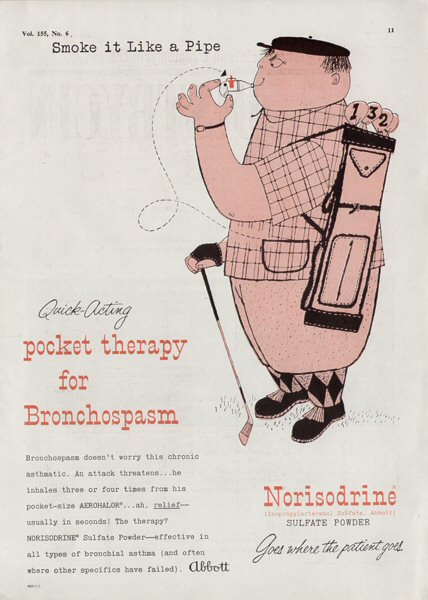
Figure 2 -- 1954 ad for Norisodrine Inhaler
1949: Norisodrine: It was a dry powder bronchodilator that was inhaled using the Aerohaler, the first modern dry powder inhaler (DPI). It was released by Abbot laboratories in 1949 as the first marketed dry powdered inhaler (DPI). The active ingredient was isoprenaline sulphate.

Technically speaking, it was the first rescue inhaler. It didn't really get much of a chance to gain the love of asthmatics mainly due to the invention of the metered dose inhaler (MDI) in 1957. Just imagine, if the MDI wasn't invented, asthmatics everywhere would probably have an aerohaler. The market for DPIs might have taken off sooner than it did.

A.R. Clark, in a 1995 article for Aerosol Science and Technology, described this inhaler this way:
"The device consisted of 'sifter' cartridges containing the powdered dose out of the cartridge and a mouthpiece through which the aerosol was inhaled. There was very little control over the delivered dose, other than patient symptoms titration, and there was no dispersion mechanism inside the device to aid aerosol generation." (2, page 382)
Each glass vile contained three smaller vials (sifter cartridges) that were set on the inhaler device.  The patient then inhaled the powder through the nose.  There were some disadvantages to this device, the most significant was the release of the MDI in 1957, which was by far more convenient for asthmatics.

The Aerohaler was also used in the late 1940s and 50s as a means to deliver penicillin.  A modern version of the Aerohaler was remarketed and available in some countries, yet it has little in common with the original.

1951: Isoetharine: This medicine was first synthesized in 1936 and introduced in Germany as Aleudrin in the 1940s.  It later entered the U.S. market as Bronkosol in 1951 as the first beta 2 specific rescue medicine. Fittingly, it was marketed as the first beta 2 specific aerosolized bronchodilator.

Because it was only attracted to beta 1 receptors, it had a stronger bronchodilating effect than than epinephrine. However, a down side is that it still did have some beta 2 effect, although less than Isoproterenol. Still, it was desirable because of the decreased cardiac affect.

Like epinephrine and isoproterenol, the medicine worked fast and lasted 1 to 1.5 hours. Also like epinephrine and isoproterenol, it was a top asthma remedy during the 1940s, 50s, and 60s.

(Check out AARC Virtual Museum for more pictures)

Medihaler Epi with its 3 inch mouthpiece
(Image obtained Google Images)
1956:  Medihaler Epinephrine: The MDI was invented in 1956, and that same year the FDA approved the Medihaler Epi. It was marketed by Riker Laboratories (changed to 3M Pharmaceuticals in 1970) as the first metered dose inhaler. Not surprisingly, it quickly gained the favor of both physicians and their patients. 

Like nebulized epinephrine, inhaler epinephrine produced only moderate relief, although it was still relief regardless. The inhaler also made quick relief portable and convenient to use, and this, more than anything, won the hearts of asthmatics.

It was usually prescribed for 2 puffs 2-5 minutes apart every 4-6 hours as needed. The medicine was also available over the counter, and without a physicians prescription. Many asthmatics, as you might imagine, used it more frequently than this to obtain relief and to relieve asthma related anxiety. A rise in asthma related deaths lead to concerns that the inhalers were the culprit. Some evidence pointed to lack of education as the culprit, resulting in inhaler educational campaigns to assure adequate inhaler technique and compliance.

The Medihaler Epi was an option for asthmatics until 1998 when 3M decided to pull the plug on the product. The reason sited was the inability to guarantee a quality product.  The company stated that the product was once thought to have a shelf life of three years, and this had been reduced to 18 months. So guaranteeing a quality product was no longer possible. (8, page 619)

It should be noted that by this time there was better and safer rescue medicine on the market, and there continued to be concerns about having a rescue inhaler available over the counter, of which this product was for many years. Most asthma experts believed if someone was having trouble breathing that they were probably better served seeking the medical advice of a physician, rather than treating themselves. Those concerns aside, while other rescue medicines required a prescription, the Medihaler was grandfathered in.

Primatene Mist inhale
Other generic epinephrine inhalers remained on the market, such as Primatene Mist. Wyeth and Armstrong (a subsidiary of Amphastar Pharmaceuticals) continued to market their version of an epinephrine inhaler remained on the market until it was phased out and ultimately discontinued on December 31, 2011.  This was partly due to the Montreal Protocol that required a phase out of CFC propellants.

Makers of over the counter inhalers fought the ban, although they lost their appeal.  Primatene Mist was finally discontinued on December. 31, 2011. As of this writing, no over the counter CFC epinephrine inhaler is available. An FDA advisory panel voted not to recommend an over the counter HFA epinephrine inhaler. (9)\
A 2005 National Health Interview Survey by the Centers for Disease Control and Prevention (CDC) determined that 7.7% of the U.S. population owned an epinephrine inhaler, which would amounted to about 23 million people, according to FDA.gov.

This discontinuation did not effect non inhaler epinephrine products. While not yet approved by the FDA, an HFA version was considered. Wyeth also contemplated an epinephrine DPI, although this is not a viable option at this time, according to FDA.com.

Medihaler Iso
(pharmaceutical-journal.com)
1956:  Medihaler Isoproteronol:  In 1956 the Medihaler-Iso was also approved by the FDA and introduced to the U.S. market in 1957.  It was the most popular asthma medication from 1957 to 1970. It may also be referred to as Isuprel Mistometer.

Another brand name to eventually enter the market is the Isuprel Mistometer and the vapo-n-iso solution delivered with the Bronkometer by Breon Laboratories.  The 1978 Physicians Desk Reference recommended that anyone requiring more than three treatments in 24 hours should be under the close supervision of a physician. I do not know when this inhaler stopped being marketed.

It was usually prescribed for 2 puffs 2-5 minutes apart every 4-6 hours as needed.

1960s:  Susphrine: This was epinephrine formulated in such a way that it lasted 6-8 hours. Doctors loved this because they could give patients susphrine along with a systemic steroid.  Then they could send patients home knowing that by the time the susphrine wore off the steroid would kick in.  It became an option for doctors in the 1960s and was commonly used throughout the 70s and 80s.  Epinephrine and susphrine were used differently by different physicians.  Some just gave you one or the other, and some recommended using epinephrine initially and then later giving susphrine for the longer action.  (I wrote more about susphrine here and here.) It was phased out as an option by the early 1990s and is no longer marketed.

1970s: Aerolone:  Remember the initial theory regarding epinephrine, the one where the vacoconstricting properties of epinephrine were thought to relieve congestion and this made breathing easier.  Aerolone again played on this theory. It was a combination of 0.35% isoproterenol (a beta receptor agonist) and cyclopentamine (an alpha receptor agonist). It was available in a dose of 0.5cc for nebulizer treatments. The belief was that the combined alpha and beta effects would produce both bronchodilation to open airways and vasoconstriction to decrease airway congestion. (1, page 857)

1970s:  Terbulatine:  It was introduced during the 1970s as both an MDI and solution for nebulization and injection.  In 1981 three brand names were approved by the FDA:  Bricanyl, Brethaire, and Brethine.  It lasted 4-6 hours, longer than epinephrine, isoetharine and metraproteronol.  A dry powdered inhaler (DPI) was marketed but never available in the U.S. It had a stronger beta effect than metraproteronol.

By the 1980s it was the main alternative to metraproteronol, with the later being the more popular alternative. The medicine was thought to be as powerful as Albuterol, yet why it never caught on as a top line asthma remedy in the U.S. remains a mystery. Many physicians chose to use it only when a tolerance to other rescue medicines was suspected.

The medicine is still used in Europe and rarely in the U.S.  The solution is still available, yet terbutaline inhalers were taken off the U.S. market in 2001.

Figure 4 --Ventolin solution came in a bottle
 with nipple syringe.  The syringe was used
to draw up 0.5cc of the solution, and it was squirted
into the nebulizer cup and mixed with 3cc of
oth normal saline. Concerns about
contamination lead to plastic ampules with
pre-measured doses of albuterol and
normal saline in the early 2000s.
Albuterol solution had a similar design,
only it had a distinct orange nipple. 
1973:  Metaproteronol:  It was introduced to the market in 1961, approved by the FDA in 1973, and marketed as Alupent in the U.S. and Metaprel and Oriprenaline overseas. The chemical composition was similar to isoproterenol and therefore it still had some strong cardiac effects.  Still, it was the first beta 2 specific rescue medicine that lasted more than 4-5 hours.

It was available as a solution for nebulization and as an MDI.  The solution came in a small, dark brown bottle with a bright orange nipple adapter to draw up the recommended 0.3cc of solution to mix with 0.3cc normal saline.  It  was the bronchodilator of choice during the late 1970s and 1980s. The inhaler was white. The inhaler was phased out as Albuterol gained acceptance during the 1980s and early 1990s.  In 2010 production of Alupent was discontinued altogether, mainly due to the acceptance of albuterol as a stronger and safer medicine. .

1980:  Albuterol:  This was introduced as the first beta 2 selective agonist in 1968.  (3) Two products, Allen & Hansbury's Ventolin and Schering-Ploughs Proventil, were approved by the the FDA in 1981.  The nebulizer solution was not available until 1987, according to FDA.gov.

Figure 5 -- Ventolin inhaler.  Like the inhaler
in general, it has not changed much over
the years. 
Outside the U.S., the product is often referred to as salbutamol and sold under various brand names.  It's also called racemic albuterol.  It's chemical composition is similar to terbutaline with some adjustments.  It's a fast acting bronchodilator and is very specific to beta receptors, which greatly limits side effects.

It's full effect is usually felt in 15 minutes.  The usual aerosolized dose is 2.5 mg or  0.5cc in 3 cc of normal saline.  It lasts 4-6 hours and is generally prescribed for use every 4-6 hours as needed. In emergency rooms and hospitals, higher doses, or continuous treatments, are sometimes given to treat stubborn cases of asthma. In fact, most physicians consider continuous albuterol nebulization as effective and safer than epinephrine injections.

It is generally recommended, however, that asthmatics seek medical attention if they need their rescue medicine more frequently than 4-6 hours. In other words, asthmatics should stick to the dose and frequency recommended by their physicians.

The Inhaler Float Test.
This was the only way
to tell how much medicine
was left in the inhaler.
Albuterol HFA inhalers
come with a counter,
so the float test
is no longer recommended.
The solution was initially obtained in a small, brown glass bottle and drawn up with a hypodermic needle or the nipple adaptor attached to the cap.  During the late 1990s and early 2000s it became available in single dose plastic amps premixed with normal saline. This change was made due to infection control. Plus this made it easier for patients, who no loner had to mix the solution with normal saline on their own.

The medicine worked so well, with side effects being so negligible, that it became the most popular asthma medicine during the 1980s and 1990s, and the most profitable asthma medicine of all time.

By 1999, the product was available as 17 unique brand names including ProAir, AccuNeb and Vospire.

The first generic albuterol MDI was approved by the FDA in 1995, according to the FDA.gov.  A dry powdered inhaler version of albuterol called the Ventolin Rotohaler was available during the late 1990s, yet it never caught on due to the high cost of production and the asthmatics inability to generate enough flow during asthma attacks.

Ventolin inhalers with counters.
Asthmatics now knew
how many doses remained.
Also in 1995, Salbumin was the first HFA albuterol inhaler. Proventil HFA was approved by the FDA in 1996.  The product was made by 3M Health Care and the marketers were Schering-Plough. (*)  This was significant because the product had already been approved by 23 other countries (****) A Ventolin HFA was approved in 2001.

All CFC albuterol inhalers have since been phased out.  Other HFA brands marketed overseas are the Ventolin Evohaler and Ventolin Autohaler ( a breath actuated HFA inhaler available in the U.K). 

According to drugpatentwatch.com, most patents for HFA inhalers are set to expire by 2020.

Another thing to note here is the color code system regarding inhalers. There is no law, but considering most MDI inhalers look alike, a color coding system was established where rescue inhalers were blue and controller inhalers were brown. So, most albuterol inhalers are brown. However, there have been generics available over the years were white or orange, and thereby their manufacturers did not adhere to the color scheme. As of this edit on April 24, 2017, there are three albuterol inhalers:
  • ProAir HFA, which is red
  • ProAir Respiclick, which is white with red cap and lettering
  • Proventil HFL, which is yellow with an orange cap
  • Ventolin, which is blue with a dark blue cap
Maxair Autohaler
1992:  Pirbuterol:  The product was introduced in the 1980s,  and was approved by the FDA in 1992 and marketed as Maxair.  It's composition was similar to Albuterol, although it improves breathing in less than 5 minutes as compared with Albuterol's 15 minutes. The side effects were similar to Albuterol. (6)

The neat thing about was it was available as an Autohaler.  This was a
breath actuated device, which coordinated the medicine with the patient's breath, resulting in better drug deposition to airways. It was phased out by 2013.

Sticking with the traditional color coding system, Maxair was a light blue inhaler with a white cap.

1990s: Bitolterol  This product was marketed by Sanofi-Synthelabo in the early 1990s. It was a beta specific medicine that had an onset of 2-5 minutes and lasted 5-8 hours. It was never widely accepted and production stopped in 2003, according to FDA.gov.

1996: Albuterol/ Ipatropium Bromide Inhaler:  A Combivent CFC inhaler was approved by the FDA in 1996, according to FDA.gov. It was commonly prescribed for patients with chronic lung diseases during the 1990s and 2000s. It was never a top line medicine for asthma, although it has always been an option.  The recommended dose is 2 puffs every 4 hours as needed, or simply four times per day. It was discontinued on December 31, 2013.

However, Boehringer Ingelheim announced via press release on October 7, 2011, that the FDA had approved the Combivent Respimat. The inhaler device does not use a propellant, and delivers a slow mist of the medicine for inhalation.

It is my opinion that there are far better options than the albuterol/ ipatropium bromide combination, and these include Spiriva, and the combination of long acting bronchodilators and inhaled corticosteroids. Still, based on previous studies, and the slow speed at which the medical community latches on to new ideas, this combination inhaler will continue to be prescribed for some time.

Now, you also have to add into here the dogmatic nature of many people with chronic lung diseases. Once you find a medicine, or a combination of medicines, that seem to work, you don't want to change. I have found this to be true by my own experience as well as by observation of my COPD patients in the hospital setting. Other than for profit, the main reason I think that Combivent Respimat is even an option today is by public outcry among the COPD community. I have no evidence of this, although it's my own personal theory.

Combivent Respimat requires two inhalations four times every day. The medicine can also be used as a rescue inhaler, although this is generally not recommended.

Combivent was generally a white inhaler with some green and some brown on the label. The cap was brown. The new Respimat Combivent is a gray device with a brown cap and some brown on the label.

1996: Duoneb:  Approved by the FDA in 1996?  It's  solution that combines 0.5cc Albuterol with 2.5 mg Atrovent and 0.3 cc normal saline.  I believe it was the first medicine to come premixed in plastic ampules. Like combivent, it's most commonly prescribed for COPD, although is an option for asthma and other lung disorders as well. From my experience, it is very common among the medical community for patients in the emergency room and hospital setting regardless of diagnosis. Various studies (such as Dorinsksy 1999) showed that the combination of albuterol and ipatropium bromide is superior to individual agents.

1999:  Levalbuterol Solution:  This medicine continues the effort to find a better and safer asthma rescue medicine. The r-isomer in albuterol was shown to cause bronchodilation, while the s-isomer was shown to cause refractory bronchospasm.  At least this was one theory devised to show why so many asthmatics seem to become addicted to their inhalers, and why so many respiratory therapists are diagnosed with asthma.

Levalbuterol is basically albuterol without the s-isomer. It was approved by the FDA as Xopenex in 1999, and was marketed by  Sepracor as being stronger than albuterol (lasting 6-8 hours compared to 4-6 hours for albuterol), resulting in fewer side effects.

Salespeople working for Sepracor initially  had trouble convincing physicians it was any better than albuterol, so they attempted a unique strategy of trying to convince patients, nurses, and respiratory therapist, who would in turn convince doctors. The marketing plan worked, sort of.

A couple problems ensued. One was that levalbuterol was very expensive compared to albuterol, which costs basically pennies on the dollar. For instance, as of 2012, one amp of levalbuterol cost $4.17 while one amp of albuterol cost only $0.75.

At the same time, clinical evidence, and subsequent studies (Ralston, 2005) did not support the initial claims by Sepracor. This resulted in many hospital administrators creating protocols recommending to physicians that they prescribe albuterol and reserve levalbuterol to rare instances when albuterol is suspected of, or feared to, cause side effects.

In my own personal experience, this has resulted in a significant decline in levalbuterol orders within the hospital setting. I have yet to look into this, although I would imagine levalbuterol sales have declined. I will look into this later.

Regardless, the medicine is available in three doses: 0.35 mg, 0.63 mg, and 1.25 mg, all premixed in plastic amps with 3 cc of normal saline. Studies showed the 0.63 dose was similar in effect to the 2.5 mg dose of albuterol. The 1.25 mg dose was believed to last from 6-8 hours, meaning less medicine would be needed during the course of the day. (10)

Levalbuterol Inhaler. In March of 2005, Sepracor announced via press release that the FDA had approved an HFA levalbuterol inhaler. It has since been introduced to the market as a light blue inhaler. In staying true to the color coding system, Xopenex HFA is a light blue inhaler.

References:
  1. Rau, Joseph L., "Inhaled Adrenergic Bronchodilators: Historical Development and Clinical Application," at AARC.org (American Association of Respiratory Care, July, 2000, Vol. 45, number 7, https://c.aarc.org/marketplace/reference_articles/07.00.0854.pdf, accessed 4/12/16
  2. Clark, A.R., "Medical Aerosol Inhalers: Past, Present, and FutureAerosol Science and Technology, 1995, 22:4, 374-91, DOI, http://www.tandfonline.com/doi/pdf/10.1080/02786829408959755, accessed 4/12/16  
  3. Sneader, Walter, "Drug Discovery: A History," 2005, Wiley, Great Britain,  page 155-157. (Sneader provides a very thorough history of the discovery of hormone therapy in the later portion of the 19th century.)
  4. " Jockichi Takamine ," Encyclopedia Britannica.com,  http://www.britannica.com/EBchecked/topic/581144/Jokichi-Takamine, accessed 3/6/13
  5.  Jackson, Mark, "Asthma: A Biography," 2009, Great Britain, Oxford University Press
  6. Barnes, Peter J, "Drugs for Asthma," British Journal of Pharmacology, January, 2006, http://www.ncbi.nlm.nih.gov/pmc/articles/PMC1760737/, accessed on 4/14/16
  7. "50th Anniversary of the first pMDIs," Pharmaceutical Journal, December 23, 2006, volume 277, page 795, http://www.pharmaceutical-journal.com/news-and-analysis/news/50th-anniversary-of-the-first-pmdis/10002907.article, accessed 5/15/16
  8. Letters to the Editor, "Withdrawal of the Medihaler-epi/ Adrenaline Medihaler: comments of the Subcommittee on insect venom allergy of the EAACI," Allergy, 1998, 53, pages 619-620, http://onlinelibrary.wiley.com/doi/10.1111/j.1398-9995.1998.tb03939.x/pdf, accessed 4/15/16
  9. Bass, Pat, "Are Primatene Mist And Generic Epinephrine Inhalers Safe?, About.com, updated January 18, 2016, http://asthma.about.com/od/treatmentoptions/a/art_primatene_mist.htm, accessed 4/15/16
  10. Waring, Nancy, "Harvard Medical School: Guide to taking control to taking control of asthma," 2003, New York, Simon and Schuster, 

Monday, April 11, 2016

1778: The Mudge Patented Pewter Inhaler

In 1778 Dr. John Mudge introduced to the world the first mass producible inhaler.  He described it in his 1778 bo0k, "A Radical and Expeditious Cure for A Catarrhous Cough." Please refer to figure #3 as this one is the one in the book that Mudge is referring to.

The Mudge Inhaler with mouthpiece missing (figure 1)
Figure ITHE Inhaler, as it appears when fitted for use; except that the Grating (a), which then ought to cover the hole, is now turned back, to shew the opening into the Valve.

Figure II:  Section of the Cover; in which is shewn the construction of the Cork Valve (b)% and also the conical part (c), into which the flexible Tube (d) is fixed.

 Section of the Cover; in which is shewn the construction of the Cork Valve (b)% and also the conical part (c), into which the flexible Tube (d) is fixed.
When the Inhaler, which holds about pint, after being three parts filled with hot water, Is fixed at the arm-pit under the bedcloaths, the end of the Tube (e) is to be applied to the mouth; the air, in the act of inspiration, inspiration, then rushes into the Apertures (f), and passing through the hollow handle, and afterwards into hole in the lower part where it is soldered to the body, and therefore cannot be represented, it rises through the hot water, and is received into the lungs,. impregnated with vapour. In expiration, the contents of the lungs are discharged upon the surface of the water; and instead of forcing the water back through the hollow handle, the air escapes by lifting the round light Cork. Valve (b)J so as to settle upon the surface of the body, under the bed-cloaths. 
Plate from Mudge's book (figure 2)
Thus the whole act of respiration is performed, without ever removing the instrument from the mouth.
The flexible part of the Tube (d) is about fix inches long, fitted with wooden mouthpiece (e) at one end, and a part (g) of the fame materials at the other, to be received into the Cone (c) on the cover. This flexible tube is made by winding long slip of silk oil-(kin oil'skin over spiral brass wire. This should be then covered with one of the fame size, of thin silk, and both be secured by strong sewing silk wound spirally round them. Some length and degree of flexibility is necessary to this tube, for the fake of convenient accommodation to the mouth when the head is laid on the pillow

Care should be taken by the workman, that the cover should be made so as to fit very exactly; or, if k does not do so, the defect should be remedied by winding piece of cotton wick, or some such contrivance, round the rim underneath the cover, so as to make it airtight. The Cork, likewise, which forms the Valve, should be made, for the above reason, as round as possible. It is also necessary to remark, that the area of the holes, on the upper part of the handle, taken together; the size of the hole in the lower part of the handle, which opens into the Inhaler; the opening of the conical Valve itself; and that in the mouthpiece, as well as the cavity or inside of the flexible Tube, should be all equally large, and of such dimensions, as to equal the size of both nostrils taken together: in short, they should be, severally, so large, as not only not to obstruct each other, but that respiration may be performed through them with no more labour than is exerted in ordinary breathing.
   It is necessary to observe, that care should be taken, when the Inhaler is in use, that the ingress and egress of the air through the holes on the top of the handle, and those in the grating on the cover, should not be interrupted by the bed-cloaths.
Indications:  Dr. Mudge recommended the inhaler for catarrhous cough.  


Medications:  Opium, Benzoil, Camphor, other


Purchase:  The inhalers are to be purchased of fW. Barnes  Pewterer, No. 157, Fleet-Street, by particular Appointment of the Author.  


A sample of a 19th century version of Mudge's Inhaler (It is rare to find one with an intact mouthpiece)(figure 3)
Reference:  
  1. Mudge, John, "A radical and expeditious cure for a recent catarrhous cough: preceded by some observations on respiration with occasional and practical remarks on some other diseases of the lungs," 2nd edition, 1779 (original edition was in 1778), London, printed by E. Allen, Fleet Street, from the opening pages of the book.  
RT Cave Facebook Page
RT Cave on Twitter
Print Friendly and PDF

Friday, April 8, 2016

1778: John Mudge invents the inhaler

While he wasn't the first to use the concept of inhaler, not even the first in his own era (Dr. Philip Stern says he invented his inhaler in 1768),  Dr. John Mudge is often given credit for both the invention of the inhaler and the term "inhaler."

A wood carving of Mudge's inhaler from Dr. Cohen's 1876 book
Dr. Stern invented an inhaler, which basically used the power of steam that was inhaled through a pipe.  Yet, for whatever reason,  Dr. Stern wasn't accepted by the medical community.  So it's Dr. John Mudge who gets all the credit.  It's Dr. Mudge who's mentioned in most medical books, and medical history books, and given credit as the inventor of the inhaler.

Mudge invented his inhaler and advertised it in his book, "A Radical and Expeditious Cure
for a Recent Catarrhous Cough," published in 1778.  The year 1778 is also supposedly the year he patented his inhaler, for which reason it's often referred to it as "Mudge: patent," although no record of a patent was ever reported. (1, page 257)

Mudge's inhaler was mentioned in various magazines and books directed to the medical profession during the 19th century, including the book"Inhalation in the treatment of disease: it's therapeutics and practice" by Dr. Jacob Solis Cohen.

Cohen provides for us the above wood carving, plus a nice description of the inhaler. He describes it as a simple pewter jug with a hollow handle with holes in it (f) to allow for the free flow of air so steam can be inhaled.  It also had a lid with two perforations.  Over one (a) a grid with a one way ball-valve made of cork can be slid over to allow air to exit but not enter.  Into the other (c) is inserted a long, flexible tube (d) that acts as a mouthpiece (e). The patient simply places his lips around the mouthpiece, inhaling the steam.

The patient can inhale simple steam, or medicated steam as desired or prescribed by a physician.  Thanks to the free flow of air from holes in the handle, and the egress of air through the hole with the grid, it was the first inhaler with a mouthpiece to allow the patient to inhale and exhale through the inhaler.

How to use it is best described by Cohen:
 "The mug being filled to two-thirds of its capacity, the water of course rises in the handle to the same level; and, therefore, when the patient inspires through the flexible tube, the air rushes through the handle of the mug into the water, and out through the inhaling-tube. When the patient expires through the tube, the air of expiration passes into the free space beneath the cover, and is expelled out of the second perforation in the cover, lifting the cork-valve in its egress." (2, page 20)
It was a great invention for its time, and was marketed into the 20th century.

References:
  1. Bennion, Elizabeth, "Antique Medical Instruments," 1979, 1980, California, University of California Press
  2. Cohen, Jacob Solis, "Inhalation in the treatment of disease: it's therapeutics and practice," 1876, Philadelphia, Lindsay and Blakiston
Further rading:
  1. Sanders, Mark, "Mudge Inhaler," Inhalatorium.com,  http://www.inhalatorium.com/page57.html, you can also review a slide show presentation on "Pioneers of Inhalation," by Mark Sanders.  Sanders has a collection of antique inhalers and nebulizers he has graciously shared with us on his website.  Mr. Sanders also provided permission to use the photo attached to this post.  
  2. Mudge, John, "A radical and expeditious cure for a recent catarrhous cough: preceded by some observations on respiration with occasional and practical remarks on some other diseases of the lungs," 2nd edition, 1779 (original edition was in 1778), London, printed by E. Allen, Fleet Street

RT Cave Facebook Page
RT Cave on Twitter
Print Friendly and PDF

Wednesday, April 6, 2016

1792: Curry confirms importance of breathing during artificial during resuscitation

Dr. James Curry obtained all the data of the various societies and came to a variety of conclusions of which he reported to the medical community in 1792 and 1815.  He confirmed that warming the victim was the single most important part of rescue attempts.  (14, pages 36-7)

This verification, partly due to lack of anatomical and pathological knowledge, further stalled the initiation of providing artificial breaths in many instances, and, perhaps, to the detriment of many victims.  As noted above, there was no rush to perform any of these procedures.  There were, in fact, many reported instances where breaths were note given until one or two hours after the person was pulled from danger.

Although, as Curry explained, once better pathological knowledge of the body was obtained, such that circulation of the vital principles (air, oxygen) is vital to sustenance of life, it was learned that "merely restoring Heat to the body, will not renew all the functions necessary to Life."  (14, page 36-37)

It was thus learned that efforts to imitate natural breathing were of superior importance to warming the victim.  (14, page 36-37)

Breathing, therefore, was ultimately viewed by the Humane Society as the "most important part of the process of Resuscitation. As soon as the temperature of the surface has been somewhat raised by means of artificial warmth, about which no time should be lost, early inflation of the lungs is of great consequence. 

Still, if the body be not above the temperature of the surrounding medium in cold weather, its success is very precarious. The temperature of the surface being once raised, artificial warmth and artificial respiration should be simultaneously employed." (12, page 5)

Curry worded it this way: (14, page 37)
In every case of apparent death, the instituting an artificial breathing, by assiduously inflating the lungs with fresh air, is one of the first and most necessary measures to be taken for recovery. (14, page 37)
So, by the advice of Curry, artificial breathing ultimately became the main priority upon removing the victim from eminent danger.  The other methods were either scrapped or moved down the priority list.

References:  See post "1774:  The birth of the Royal Humane Society"

RT Cave Facebook Page
RT Cave on Twitter
Print Friendly and PDF

Monday, April 4, 2016

1874: Solis Cohen recommends tracheotomies for croup

While physicians of the 18th and 19th century were frequently afraid to perform the procedure of tracheotomy, a few physicians, such as Dr. Armand Trousseau, Dr. J. Soles Cohen, and Dr. Morrel Mackenzie strongly recommended that every physicians become adept at the practice, as it is sometimes the only means of saving the life of a child who is suffocating daue to croup.

Mackenzie, a nose and throat specialist , said the first person to recommend the operation of tracheotomy for croup was Francis Home, who published a book on the subject in 1765 called "An Inquiry into the nature, cause and cure of croup." (1, pages 134, 523)

He said various other physicians followed suit, including doctors Crawford, Chaussier, Schwilgue, and others.  (1, page 523)

Trousseau (1801-1867) was an ardent supporter of the procedure, and his thoughts on the subject were often referenced by Cohen as he attempted, in his 1874 book "Croup, in its relations to tracheotomy," to convince his colleagues the procedure was sometimes necessary, and that every physician should become adept in performing the operation.

The procedure had been performed many times in the ancient world, although with great difficulty and risk.  Cohen said it wasn't until 1782 that the first successful tracheotomy for croup was performed, and this way by John Landree in London, and later by Chevalier in London in 1814.  (2, page 7-8)

He said Bretonneau also performed a successful tracheotomy for croup in 1825, yet that was only after two unsuccessful attempts in 1818 and 1820. Professor Stolz succeeded in 1825, and Armand Trousseau in 1833. (2, page 7-8)

Trousseau, Cohen said, "remained the most zealous advocate of the operation during his entire life." (2, page 7-8)

Cohen also explained that successful tracheotomies were rare prior to the 1850s, and the main reason for a rise in success rates was improved care during the procedure, which was mainly due to a new idea called the germ theory of disease.
Post operative deaths declined slightly due to increased attention paid to these patients following the operation.  (2, page 8)

Cohen went on to note statistics comprised by various studies performed that resulted in increased confidence in performing the procedure. (2, pages 8-26)

It should be noted, however, that during this time in our history it was rare for a patient to visit a physician in a controlled setting.  In most instances, when a person was sick, a physician was sent for, and he rode in on his horse and buggy to take care of his patient.

So it was very rare for the operation of tracheotomy, or any operation for that matter, to take place in a controlled setting.  If efforts to control infection were made, it was solely the responsibility of the physician.  One could imagine that, upon observing a young child who was suffocating due to a swollen throat, that a physician would have little time to consider aseptic procedure.

Despite this fact, Cohen said a patient would be more likely to survive such an operation at home than in a hospital.  Cohen said that...
...hospital cases in themselves, as a rule, offer less chance of recovery than cases in private practice, though the operation is frequently performed better, and the after-treatment is much more assiduous." (2, page 8)
A common cause of distress among children, and a common cause for the airway to become swollen and cause suffocation, was croup.  By this age there was a lot known about this disease, particularly that it was inflammation of the throat that can occur as a result of diseases like diptheria.  (2, page 27)

Cohen recommended, that upon visualizing a child, or adult, with croup, that an immediate assessment be made, and the decision to perform a tracheotomy should only be made "whenever it is apparent that death from suffocation cannot be averted by any other means."  (2, page 27)

In other words: tracheotomy should only be used as a last resort to save a life.

The procedure involved the physicians cutting the throat with a blade.  It would have been distressing for all involved, and very painful for the child.  It would have required the parents, and anyone else in the room, holding the child still. It would not have been a pretty site to behold.

When the child was screaming, writhing and turning during the procedure, this increased the risk that the physician would make an incision in the wrong spot. This could cause extreme agony, although it could also increase the risk of death.

For this reason, when the procedure was performed in Great Britain, Germany and the United States, chloroform was would be used as an anaesthetic.  The physician would be well versed in how to obtain it, how to store it, and how to provide it to a patient.  In the case of a screaming child, he would use it liberally, although never in an amount that would risk the child dying as a result of the poison.  (2, page 34)

If you lived in France, however, and you were the poor child suffering, your physician would not provide you with an anaesthetic.  Surely the drug was good for calming a child down, but if given in too high amounts this would cause breathing to become so shallow that asphyxia sometimes occurred, resulting in brain injuries and death.  (2, page 34)

This was especially a concern because there were no standard doses, and it was particularly difficult for a physician to accurately dose a small child.  When not enough was given, the child would continue to fight.  However, when too much was given, the risks were too severe for French physicians to recommend the poison.  (2, page 34)

Regardless of the option to use Chloroform, many physicians were slow to use it, and slow to perform the procedure of tracheotomy, because there was always the hope that other methods would work.  The dilemma of where to draw the line, and when to perform the procedure, continued to plague physicians.  Cohen said: (2, page 5)
Tracheotomy for croup is generally regarded with much disfavor in this city. Its results in Philadelphia have been less encouraging than almost anywhere else; probably because, as a rule, the operation is postponed too long; possibly because our medicinal treatment of croup cures a number of cases which, under less efficient management, would become subjects for tracheotomy; but, whatever the cause, the results, in the comparatively few instances in which the operation has been performed, have been so disheartening, that many practitioners refuse to sanction tracheotomy in croup under any circumstances. This radical feeling is wrong. Not only should our individual experience be utilized in judgment, but the recorded experience of others also. Early failures may be followed by ultimate successes. (2, page 5)
To encourage physicians to use the procedure when needed, he provided statistics. He said: :
Barthez, in a letter to Eilliet on the comparative results of the treatment of croup by tracheotomy and by medication during the years 1854-1858, stated that the first year the Hospital Sainte-Eugenie was opened, 13 croup patients were submitted to tracheotomy, of whom the first died during the operation, and 11 others in succession after the operation; the first recovery taking place in the thirteenth case. Yet Barthez had many successes afterwards; for in a letter published in 1868, he stated that in the same hospital, between the years 1861-1867, 785 cases were operated upon, with 222 recoveries. Guersant lost his first 23 cases, between 1834-1841 ; but after that saved 17 out of 82.
He also referred to statistics by  Armand Trousseau, a 19th century physician who strongly recommended the procedure.  Cohen said:
Trousseau, up to 1842, had operated 119 times, with but 25 recoveries; but at a later date (1854) he reported 222 operations with 127 recoveries. Similar examples of early want of success followed by results truly gratifying are on record. But there have been results even worse than these. Thus Trousseau, in a discussion on tracheotomy in croup, before the Academy of Medicine, in 1858, mentioned, that in the earlier days of the operation, Gosselin, Deguise, Huguier, Jarjavay, and Monod, Jr., of Paris, performed 95 operations successively without a single recovery; that Alphonse Guerin, Mtchon, Laugier, Robert, Nelaton, Lenoir, and Depaul saved but 11 cases out of 117 operations; and Velpeau, Jobert, and Desormeaux but 16 out of 84. He attributed much of this want of success to the idea then prevalent that the surgeon's duty ended when he had opened the trachea. (2, page 5-6)
Trousseau, therefore, recommended that the physician should continue to care for the patient long after the operation was performed.  If he was unable to attend the patient after the operation, it was his job to educate those would were, particularly parents, spouses, relatives, or friends who would be taking care of the patient.

Despite the risks, despite the fears of the physician, despite the anger of parents who watched as their children had their throats cut open, Trousseau recommended that the physician should not be afraid to use the procedure to save a life, and lack of skill and fear was no excuse to evade the procedure.

He strongly recommended that every physician become educated about the proper methods of performing the procedure, and to then to perform it whenever a need arose.  Since practice makes perfect, he suggested that the more a physician performed the procedure the better he would become capable of performing it. The statistics he offered in his book were used to prove it.

Cohen said:
That tracheotomy saves many croup-patients from death otherwise inevitable, and that, too, even under unfavorable circumstances, there has long been no reason to doubt: there is little doubt, either, that patients are occasionally tracheotomized unnecessarily; but the proportionately small number of such instances, whether errors of judgment or errors of prudence, is, in all probability, insignificant in comparison with the number of patients saved by the operation from certain death; life being preserved in the one instance, while it is not sacrificed in the other. (2, page 6)
Cohen reminds physicians that tracheotomy is not a cure for croup, and that it is merely a means of postponing death to allow nature, along with the physicians remedies, time to work.  He said:
Tracheotomy, in itself, does not cure croup. It affords a possibility of recovery by postponing, or insures it by averting death. The course of the disease is continued until all its attendant phenomena have undergone evolution. The surgeon's knife merely cuts a path for air to reach the bronchi in quantity sufficient for the requirements of the respiratory process, and saves the muscular force, exhausted in futile efforts at respiration through the glottis. Is it not possible that the freedom of breathing, and consequent conservation of strength, would aid the system to resist the full effects of the development of the disease, in the further production of exudation, or its plastic deposition upon the bronchial mucous membrane? Then the artificial opening affords a better means of escape for the false membrane, whether dispelled by cough or removed by instruments inserted through the wound; it enables a more efficient application of local remedies to retard the congelation of the exudation into membranes or casts; and thus facilitates the discharge of the plastic material by cough. In short, it gives the patient a chance, offered by no other means, to live and fight through the development and decline of the disease. (2, page 6-7)
A cannula was usually inserted into the stoma, and usually the one's used were double lumen. A double lumen was first used by George Martin in 1730, and was modified by Trousseau.  Cohen said it was important to insert the cannula...
...so that the inner tube projects a little beyond the terminal extremity of the outer one, so as to free the latter when the former is removed or inserted. The proximal (the part closest to the patient) extremity of the outer tube should be suspended by movable joints in a perforated plate to be fastened upon the neck by means of tapes or to adjust itself to the movements of the trachea, avoids pressure against the mucous membrane to some extent; and, thus far, prevents ulceration of the trachea; a serious complication which sometimes attends a prolonged use of the tube, though it sometimes occurs within 36 or 48 hours. The size of the tube should be as large as can be conveniently employed without touching the walls of the trachea. Trousseau thinks that the canula should be of larger calibre than the glottis. Others recommend that it should be about as large as the calibre of the cricoid cartilage, which is considerably less than that of the trachea, in some cases much less. By having a number of tubes of graduated sizes the nicety of adjustment may be attained, whatever may be the age of the child; the same sized tube employed promiscuously for all cases, as is the habit, will not always be well adapted to the case in hand. Too short a canula may be coughed outside the trachea, rendering the patient liable to become asphyxiated in a few moments by its pressure externally. Three times an accident of this kind occurred in Trousseau's practice (2, page 48)
According to Mackenzie, Soles-Cohen was among the many physicians of this era who worked to...
...modify the instruments, to improve the method of procedure, to determine the relative merits of the various operations on the air passages, or to lay down more clearly the indications for the performance of these operations." (1, page 523)
So by trial and error, various improvements were made to both the technique used in performing the operation of tracheotomy and in caring for the tracheostomy after the procedure.  The cannula and inner cannula were improved so that by the end of the 19th century the models used were recognizable to those used today.

A few more advancements would be made during the next several decades, and, finally, in the 1940s the procedure would be perfected.

References:
  1. Mackenzie, Morrell, "Diseases of the athroat and nose, Volume I, 1880, Philadelphia, Presley Blakiston
  2. Cohen, J. Solis, "Croup, in its relation to tracheotomy," 1874, Philadelphia, Lindsay and Blakiston
RT Cave Facebook Page
RT Cave on Twitter
Print Friendly and PDF