Showing posts with label Neuburger. Show all posts

Tuesday, June 23, 2015

400 B.C.: How did Hippocrates assess his patients


Hippocrates examining a child, a painting by Robert Thom, 1950's.
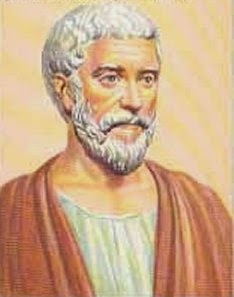
Hippocrates became the most famous physicians of ancient Greece during the Age of Pericles by his skill and gentle approach as a physician. His approach to medicine was highly regarded not just by his patients, but by his peers. By his example, and through his writings, he would almost single handily improve the image of medicine.

In order to help future physicians develop the skills and technique needed to become a respected physician, and to create a good image of the profession, he compiled all the medical wisdom from the school of Cos into a series of 60 medical treaties called The Hippocratic Corpus.  

Most historians now believe that he did not write all of the Corpus by himself, although most would agree that he was, for whatever reason, the most significant and respected physician of his era, and for this reason his name is attributed to the treaties.  It would go on to become the cornerstone of Greek medicine, and all of medicine for the next 2,000 plus years.  

In this way, Hippocrates became the most famous physicians of his era and all time.  Not only was he referred to as "The Great Physician" during his time by the philosopher Plato, but he is referred to by most historians as "The Father of Medicine." 

By resorting to simple or natural remedies first, Hippocrates, like other physicians at the school of Cos, preferred the medical philosophy of looking out for the best interest of the patient, and to avoid risky treatment.  Such may be evident by the motto "first do no harm."

When Hippocrates was called to help a patient, he would pack his bags and travel to the patient's home.  As he was taught by his predecessors at the school of Cos, he would consider the patient as a whole.  As noted by 18th century physicians Bernardino Ramazzini, Hippocrates encouraged the following: 
'When you come to a patient's house, you should ask him what sort of pain he has, what caused them, how many days he has been ill, whether the bowels are working and what sort of food he eats.' (1, page 15)
Of the assessment of the patient, Garrison said:
Hippocrates instituted, for the first time, a careful, systemic, and thorough-going examination of the patient's condition, including the facial appearance, pulse, temperature, respiration, excreta, sputum, localized pains, and movements of the body. (2, page 89-90) 
Medical historian Max Neuburger said the following were also assessed:
Odour of the sweat, of the sputum, of the vomit, the urine, the faeces, of the discharge from wounds; the taste of skin secretions, of wax from the ear, of nasal mucus, of the tears and sputum (sweet or the contrary) and of diverse other body fluids had to be investigated, partly by the physician, partly by the patient himself.  (5, page 145)
The color, consistency, and smell of phlegm was also assessed.  The assessment was useful in helping the physician come up with a diagnosis and prognosis, which would help determine if the patient was curable.  If the patient was curable, the prognosis was used to determine the eventual remedy or cure. 

For instance, as noted by Neuburger:
Yellow sputum, mixed with a little blood, occurring at the beginning of the illness in a patient suffering from inflammation of the lungs is a sign that he will recover, and is beneficial, occurring for the first time about the seventh day it is a somewhat surer sign.  (5, page 145)
Hippocrates himself wrote the following of his assessment:
Thus, it considers the voice, as to its clearness or hoarseness. It examines the discharges from certain regular channels; and drawing consequences from their odour, colour, consistence or fluidity,—he judges of the character of the disorders, and the existing state of the patient; and by the same means, medicine is even enabled, not only to ascertain the past, but likewise his future state. After having thus become acquainted with diseases, by their symptoms, if nature is unable to effect a cure, art then teaches how to excite those salutary movements, by which, without danger, the system may discharge itself of what is injurious to it. (3)
Regarding the movements of the body, Hippocrates was known to listen to a patient's heart and lung sounds by placing his ear upon his patient's chest, although if he wanted a more thorough examination of the humours inside the patient's chest, he would shake the patient, gently perhaps. This allowed him to hear secretions, if they were present, in the patient's chest.  (2, page 90)(5, page 146)

The procedure was called succussion, and was mainly used to recognize the presence of pus in the lungs to diagnose the presence of an empyema (pus in the pleural cavity, or the cavity surrounding the lungs. In fact, if a physician performed the procedure and failed to diagnose empyema when it was present, this was considered a "sign of lack of surgical dexterity," said Neuburger. (5, page 157)

According to Neuburger:
This shaking was supposed to effect the outflow of pus from the parenchyma of the lung by way of the bronchi... Recognition during this process of the splashing sound which occasionally occurred (in pyo- and hydropneumothorax, but also in bronchiectasis and cavities) resulted in the employment of succussion (known now as Hippocratic succussion) as a diagnostic method in order to determine whether and where pus were situated in the pleural cavity, also the most suitable spot for incision in thoracocentesis (a procedure involveing placing a needle into the chest and drawing up the excessive pus in the pleural space, or the cavity surrounding the lungs). (5, page 146)
Neuburger said succussion, "If it, and the pouring of fluid into the throat to excite coughing and expulsion of the pus, fail, then the operation of thoracocentesis is called for." (5, page 146)

Sounds other that the rare secretions heard upon succussion were also listened for by auscultation.  Some conditions caused a rattling sound in the trachea.  Diseases such as pneumothorax might cause crepitations, which is air bubbles under the surface of the skin, particularly on the upper chest area.  Pleuritic frictions, or what is now called a pleural rub, was also listened for.  This might indicate a collapsed lung (pneumothorax) or other such malady.

Certain noises in the chest may indicate hydrops of the lungs, or what would now be considered pulmonary edema caused by heart failure, kidney failure, or sometimes pneumonia.  Hydrops is an old term for water in the lungs.  Of this, Neuburger wrote:
Of the diagnosis of "Hydrops of the lung" it is stated: "When the ear is held to the side and one listens for some time, it may be heard to seethe inside like vinegar."  A pleuritic friction is well described... "A grinding may be heard which sounds as if it came from two leather straps." (5, page 147)
The Hippocratic concept also took into consideration the desires of the patient. As noted by Withington:
The wishes, and even the whims of the patient are to be indulged as far as possible, and a physician should rather lose his fee than trouble a sick person about it, for the memory of a good deed is better than a temporary advantage. He should also neglect no opportunity of serving the poor and the stranger, for "where the love of the art is, there is the love of man. "  This last quotation, indeed, is from a work of very doubtful authorship, but it expresses the spirit, if not the words of Hippocrates. (4, page 51)
Hippocrates paid attention to the prognosis more so than the diagnosis. Neuburger said this was so "that the preservation of the organism be his goal." (5, page 147)

He said Hippocrates was well aware of the "limitations and of the potentialities of his art."

And he made sure he "occupied himself only with those diseases in which a cure might be anticipated and approached the sick-bed inspired by the principle: 'Do good, or at least do no harm.'" (5, page 147)

He spared no effort to ease the mind of the suffering, even when he knew there was no chance that his remedies would cure the patient's disease.

References:
  1. Ramazzini, Bernardino, writer, "Disease of Workers," Wilmer Cave Wright, translator, 1964, New York, Hafner,  (8)
  2. Garrison, Fielding Hudson, "An introduction to the history of medicine, 1922, (9)
  3. Hippocrates, "The Art of Medicine," Section I, Treaties III, translated by John Redman Coxe, "The writings of Hippocrates and Galen," 1846, Philadelphia, Lindsay and Blakiston (10)
  4. Withington, Edward Theodore, "Medical History from the Earliest Times: A Popular History of the Art of Healing," 1894, London, The Scientific Press.  (3)
  5. Neuburger, Max, writer, "History of Medicine," 1910, translated by Ernest Playfair, Volume 1, London, Oxford University Press
RT Cave Facebook Page
RT Cave on Twitter
Print Friendly and PDF

Monday, May 18, 2015

760-370 B.C.: Hippocrates redefines medicine


What did Hippocrates really look like. Some historians speculate
most busts of him were made after his lifetime. Prioreschi said:
"It is highly probable that physicians of the Periclean Age wore
their hair and beards as much like the figures of Jove or
Aesculapius as possible, and were otherwise not lacking in the
self sufficiency which characterized the Greeks of the period.
We may therefore infer that the supposed portraits of Hippocrates
are only variants of the busts of Aesculapius. (1, page 92)

There are only a few people in our history whose contributions were so significant they end up being deified. One such man was the great physician Hippocrates.

While he may not have done all the work himself, his name is on one of the first and most significant medical treaties of all time: the Hippocratic Corpus. It would mold the image of Hippocrates, establishing him as the greatest physician of his time and of all time.

The Hipporcratic Corpus, often simply referred to as the Corpus, is a compilation of over 60 medical treaties which are essentially compilations of all the knowledge learned by Hippocrates from his "immediate ancestors," said medical historian Edward Meryon in his 1861 book "A history of medicine." (6, page 22)

The name Hippocrates is a reflection of all the great physicians that formed Greek medicine.  The Corpus is a reflection on the era he was born into.

Pericles (495-429) was in charge of the Athenian
Military during the Pelopannesian War, and
became a leading statesman and orator for Athens. 
Hippocrates was born on the island of Cos, near modern day Turkey, around 460 B.C., during the peek of Athenian democracy, an age when Pericles (495-429) walked the earth as a famous Greek general, statesman, and orator.   (1, page 21-22) (2, page 86)

It was an era of ancient Greece where the citizens of Rome had little work to do, and therefore had plenty of time to read, learn, and think.  This was made possible because most citizens had many slaves who did all the work for them.  This, it is said, gave rise to the Age of Philosophers in ancient Greece.

Of this time in our history, medical historian Fielding Hudson Garrison, in his 1922 book "An introduction to the history of medicine," said:
Never before, or since, had so many men of genius appeared in the same narrow limits of space and time. (2, page 86)
Medical historian Edward Meryon, in his 1861 history of medicine, said:
He lived at the most remarkable epoch of intellectual development, having as contemporaries the philosophers Socrates, Plato, and Xenophon; the statesman Pericles; the historians Herodotus and Thucydides; the poets Pindar, AEschylus, Euripides, Sophocles, and Aristophanes; and last, though not least, the sculptor Phidias. (1 page 22) (also see 8, page 126)
Garrison said Hippocrates was born into an era where the primary role of the physician was "either an associate of priests in times of peace, or a surgeon in times of war."  (9, page 87)

He was also born into an era where medicine was a blend of superstition and mythology, and was esoteric wisdom known only to the priest/ physicians at the Asclepions.  Those who were sick would spend time among the priest/physicians there, and the remedy would be revealed, and often involved magical elements such as incantations and amulets.  Yet these Asclepioins were not hospitals per se, merely places where the sick could learn the healing wisdom from the god Asclepius.

Those who were sick might also summon for a physician, men who, like the priest/physicians, were trained at the Asclepions. Yet these physicians were free from the bonds of the Asclepions, and were able to reach out to the general population, most often visiting their patients at their homes.

Medical historian Max Neuburger said:
From Homer's time (about 800 B.C.) and onward poets and historians make mention of lay physicians who freely exercised their profession untrammeled by temple medicine. In very early times the custom arose for communities to appoint official physicians whose duty it was, for a fixed salary, to to attend the poor gratis, to make the necessary sanitary arrangements in the presence of epidemics, and as experts to give evidence in court: it is equally certain that a medical corp accompanied armies and fleets... and that Greek physicians accepted posts as court and personal medical advisers to foreign princes. (8, page 97)
Natural medicine made it's way into the priesthood at the temple of Cos at an early date, and such medicine was learned by physicians who would then take their medicine outside the temple.  So this provided more options for the sick.  For those who were perplexed by the puerile medicine at the temples, they could summon a physician who practiced natural medicine.

Neuburger said that over time, particularly at Cnidos and Cos, there was a complete separation at the Asclepiades of all temple magic. So the priests and their magic ultimately gave way to physicians and their natural remedies. In the meantime there was a mixture of both types of medicine. (8, page 99)

Once summoned, the physician would then pack his bag of medical supplies and travel to the sick person's home.  Of these medical bags, Neuburger said:
On medical journeys a portable case was taken with indispensable instruments, bandages, ointments, plasters, emetics and purgatives. Such cases have been discovered (8, page 98)
Neuburger said there were also medical homes with sick rooms where the sick could see a physician for temporary treatment, although these homes were mostly reserved for people who required surgical intervention, such as for fractures and open wounds.  (8, pages 97-98)

Since there were no medical treaties at the time, there were no regulations and no standards as to how a physician was instructed. For this reason medical studies varied from one school to the next.

The result was often physicians who were ignorant of their trade, rough with their patients, and painful by their remedies. Many Greeks eventually recovered from their ailments without the guidance of a physician, and therefore it was often suspected that when a physician cured he was merely lucky.

As Hippocrates would later describe, this situation was exacerbated...
...under the pretext that physicians never undertake the care of those, who are already overpowered by disease. They say, that he cheerfully attends on such as would recover without him—but not a step will he take in behalf of those who are most in need of his assistance. If there was an art of medicine, they moreover say, it ought to cure these as well as the former. (3)
So it was no wonder that the sick would prefer to travel long distances to an Asclepion, or stay at home, tucked in their cozy beds, waiting their fate, as opposed to risking a call for any random physician.

Meryon said that most of what is known of the school of Cos, and later about Hippocrates himself, comes from biographies written after the death of Hippocrates.  From these we learn he was the "scion" of a family of physicians at the school of Cos "which had followed the pursuit of medicine at least 300 years." (1, page 21-22)

These physicians were well aware of the poor image of physicians.  They believed this poor image was due to the practice of physicians who graduated from the school of Cnidron.  This school was about 20 miles from Cos, and these physicians didn't care about the poor image, and did little if nothing to improve it.

Medical historian Edward Withington, in his 1894 book "Medical history from its earliest times," said physicians at the school of Cnidron were aggressive with their treatment. He said this is exemplified by the their motto: (4 ,page 52)
"Accurate diagnosis and vigorous treatment."  (4 ,page 52)
Medical historian Max Neuburger said Cnidian physicians focused on diagnosis, and then finding cures for these. He said: (8, page 114)
Their therapeutic methods, in accordance with their ideas upon localisation, appear to have been mostly topical, more radical than expectant and individualising. With knife and cautery to hand they were nothing loth to perform excision of a rib in empyema or nephrotomy in renal abcess and did not hesitate to order excessive purgation, dietetic cures or exhaustive walking exercise. (8, page 115)
Some of their therapeutic methods included: (8, page 115)
  • Injection of fluids in the air passages to produce coughing
  • Inhalations to promote the expulsion of mucus or pus from the lungs
  • Application of leather bags for the purpose of fomentation, swinging movements, etc. (8, page 115)
He wrote about a case described by Caelius Aurelianu in which a prominent physician named Euryphon at the school of Cnidus (a contemporary of Hippocrates) "tries to show that pleurisy is an affection of the substance of the lung."  (4 ,page 52)

Withington said Aurenlianu described the patient as being "thin as a skeleton, his legs like reeds, his chest still full of pus, and his ribs covered with scars from the cautery irons of Euryphon." (4, page 52) 


Neuburger said the writings of Euryphon, all of which have been lost, are believed to have influenced some Hippocratic writings. (8, page 115)

Physicians of Cnidron were also known to take bribes and use poisons to kill the enemies of their patients. To the physicians at Cos, this must have been the culmination of what was wrong with the profession, and what their potential patients must have feared the most.  So their aim was to change this image.  

The physicians at Cos frowned upon the act of using medicine to kill.  They frowned upon the act of being rough with their patients, and using aggressive treatment that was painful, and sometimes killed.  They were very concerned about the image of the profession and they aimed to improve upon it.  They aimed to create a kinder, gentler approach to medicine. This approach is later exemplified by the Hippocratic Treaties "On the Art of Medicine." (3)  

Hippocrates described a family of physicians who impressed upon their students that good bedside manner was essential.  They encouraged the use of gentle hands and gentle remedies. They were encouraged to assess their patient and their surroundings, and to "compare his disease with such as he had previously seen, either the same, or approaching thereto, and which he has cured by the admission of the patient himself." (3)

Like the Cnidian physicians, Con physicians performed accurate assessments, and even accurately described diseases and their treatments.  But the Con were more interested in prognosis than diagnosis, with their cures being based on this prognosis. (8, page 117)

Born into the Con family of physicians was Hippocrates II, a man history knows as the great Hippocrates.

Hippocrates II was the son of Heraclides, and the grandson of Hippocrates. Some historians said he was a direct descendant of Asclepius, and perhaps it was for this reason that Galen (2nd century A.D.) would later say of Hippocrates that "his writings should be reverenced as the voice of a deity." (6, page 21)(also see 5, page 23)(also see 6, page 203-204)

John Watson, in his 1856 book "Medical history from the earliest times," said it was from his father that Hippocrates learned much of his skill, technique and work ethic.  As a child he also had access to the "ablest masters in science and philosophy," and all the best physicians in the world. (5, page 46)(6, page 204)

Watson said that after the death of his father, he traveled to many countries before pursuing his profession in Macedonia, Thrase and other parts of Greece before settling in Thesally where he spent the later portion of his career.  He probably also taught at the School of Cos. In fact, some accounts have him starting the school.  (7, page 46)(8, page 86)

Neuburger said religion prohibited the examination of the internal organs of the human body for the purpose of science.  The only time a person's insides could be examined would be by the wounds obtained during fights in the gymnasium or on the battle field, or during the rare surgery that was performed.  For this reason, Hippocrates must have spent some time in the gymnasia, either as a student or as an observer.  (8, page 150, 156)

Physicians also spent time examining the naked bodies of the men, and so they would have learned, by observation and palpation, what was normal and what was abnormal.  By palpating abdomen's they would have learned what what normal and abnormal abdominal organs, such as the liver and spleen, felt like.  (8, pages 146, 150)

The only other means a physicaians might have learned anatomical knowledge was by dissecting animals, or spending time in slaughter houses or watching sacrifices. (8, page 150)

So, that in mind, it was unlikely Hippocrates observed an autopsy, although highly likely, perhaps with the guidance of his father, that he spent time at slaughtering houses, or observing sacrifices, or observing surgical cases, in order to obtain anatomical knowledge.  It's also highly probable that he spent time in the gymnasium at Cos to observe his father at work, but also to learn about the human body.

Neuburger said:
With regard to the respiratory tract, the Hippocratists knew the trachea, epiglottis and bronchi, and described the lungs as having five lobes... The circulatory system is described in the various writings in a most confused manner.  The starting-point was at first supposed to be the head, later the aorta and vena cave, which were thought to spring from the spleen and liver; according to the book De morbo sacro, all arteries enter the heart.  
He would have learned that the trachea, bronchi, and arteries were hollow and contained air.  He would have learned various bones, joints, bone marrow, and sutures of the skull.  Knowledge of the viscera (heart, liver, stomach, esophagus, intestines, liver, bladder, spleen, and kidney) was "scanty," said Neurburger, although he would have learned what was known about them. (8, page 151)

He would have learned of the nervous system, but sometimes nerves were confused with tendons, said Neuburger.  He would have learned about the four humours, the four qualities, and the four elements, and that their balance was what maintained health, and their imbalance what caused maladies.  (8, page 152)(9, pages 268-270)

He would have learned about a vital principle that was inhaled by the pneuma (breath), and that the "fundamental principle of life is the 'inherent' warmth of the body which has its seat in the left heart. Under the influence of this inherent warmth elementary fluids of the body are formed from food, and from variable admixture of these fluids solid parts of the body are formed." (8, page 152-153)

Organs are "built up" by nutrients obtained from the blood, which was created in the liver, warmed in the left ventricle, and circulated by means of the beating heart through the veins.  Cool air was taken in by the lungs to cool the heart.  (8, page 153)

He learned that the pneuma originated in the heart, or brain, and circulated through the body from one of these organs.  This pneuma would have been responsible for sensation and movement.  The brain may have been responsible for many of the ailments of the body, including diseases of the lungs, colds, catarrh (inflammation), etc. (8, page 153)

Of this, Neuburger wrote:
The brain is, for the most part, looked upon only as a gland, as the seat of cold and phlegm, entrusted with the task of attracting to itself the superfluous water of the body.  (If, in the functions, a disturbance sets in, abnormal accumulations of phlegm occur in other organs, i.e. catarrh.)
When an imbalance of the functions of the body occurs, such as an imbalance of the humours, the brain loses its ability to control the flow of fluids to it, and excessive phlegm flows to one or another organ of the body. For instance, excessive phlegm flowing to the lungs causes asthma, pneumonia, pleurisy, empyema, and phthisis. The same to the nose causes catarrh and coryza.

So through his studies he would have learned the basic anatomical structures of the body, and how they worked together in unity to create life, maintain health, and restore health.  He would have learned how nature assisted in this process.

Thomas Bradford, in his 1898 book "Quiz questions on the history of medicine," said that, at the school of Cos, Hippocrates would have learned from the theories and cures recorded on the stone tablets, or votives, that were stored there.  (5, page 23)

Bradford said he participated in...
"...careful study of the medical records found in the votive offerings that hung in great profusion about the walls of the Aesclepiads.  He soon began to have a reputation as a physician, and his name was known not only in Greece, but in foreign courts also. (5, page 23)
He used the wisdom he learned from his father, at the school of Cos, and from the sages during his travels abroad, to become a very gentle and skillful physician. He would win the hearts of both his patients and his fellow physicians, thus improving the image of the profession, said Withington (4, page 50)

References:
  1. Meryon, Edward, "The History of Medicine," Volume I, 1861, London,  (6)
  2. Garrison, Fielding Hudson, "An introduction to the history of medicine, 1922, (9)
  3. Hippocrates, "The Art of Medicine," Section I, Treaties III, translated by John Redman Coxe, "The writings of Hippocrates and Galen," 1846, Philadelphia, Lindsay and Blakiston (10)
  4. Withington, Edward Theodore, "Medical History from the Earliest Times: A Popular History of the Art of Healing," 1894, London, The Scientific Press. (3)  (7)
  5. Prioreschi, Plinio, "A history of medicine: Primitive and ancient medicine," v (1)
  6. Watson, John, "The Medical Profession from the Earliest Times: an anniversary discourse delivered before the New York Academy of Medicine November 7, 1855," 1856, New York, Baker & Godwin  (4)
  7. Sigerist, Henry, "A History of Medicine," volume 2, 1961, Oxford University Press  (2)
  8. Neuburger, Max, writer, "History of Medicine," 1910, translated by Ernest Playfair, Volume I, London, Oxford University Press
  9. Coxe, John Redman, translator, "Hippocrates, the Writings of Hippocrates and Galen," 1846, http://oll.libertyfund.org/titles/1988, accessed 7/6/14, also see the book online at Google books, Philadelphia, Lindsay and Blakiston
    RT Cave Facebook Page
    RT Cave on Twitter

    Print Friendly and PDF

    Monday, May 11, 2015

    500 B.C.: Pythagoras introduces Greece to philosophy

    Pythagoras of Samos (570-495 B.C.)
    Even though he made no direct impact on medicine itself, Pythagoras of Samos (570-495 B.C.) may well be the most significant figure to our asthma history. The reason is because he might have been responsible for bringing Egyptian and Babylonian philosophy, math, astrology and medicine to ancient Greece.

    By no means am I implying here that Pythagoras invented philosophy, for that couldn't be further from the truth: the quest for knowledge, which is what philosophy is, started long before Pythagoras was even born.

    Near the beginning of civilization there were a few sages who pondered in secret about the world around them, and doubted it was all created by the gods.  They asked questions and sought answers, and what they discovered became the first theories.

    They studied the stars and planets and became the first astrologers.  They studied numbers and became the first mathematicians.  They studied geometry and became the first architects.  They studied medicine and became the first physicians.

    Pythagoras celebrates sunrise (by Fyodor Bronnikov)
    Such wisdom was only privy to a select few members of the priesthood or aristocracy, and what they learned was used to advance civilization.  An anonymous sage in Sumeria invented the potter's wheel to make clay pots, and and another sage learned how to build channels and aqueducts to irrigate the land. Another anonymous sage invented a language and a system of writing.  An anonymous sage in Egypt invented the material and tools for building massive pyramidal structures, and another learned how to mummify the dead to prepare their bodies for the afterlife.

    The problem with this early philosophy was that it was far and few between.  The majority of the people, about ninety-nine percent of them, worked a minimum of twelve shifts everyday, seven days a week.  They did not have time to think and ask questions let alone time to learn.  Yet during the 9th century B.C. things were occurring in ancient Greece that would change all this, thus giving rise to the Age of Philosophy in ancient Greece.

    No one knows exactly when this occurred, but sometime before the great poet Homer sat down to write his epic poems, gymnasiums were being built near the temples of various gods,and these were dedicated to shaping the bodies of young men.  (1, page 80)

    In these gymnasiums young men would exercise, play games, and otherwise prepare their bodies for battle. Occasionally they ventured off to battle, and they won many wars, and they marched home with prisoners of war.  These prisoners were turned into slaves, and by the 6th century B.C. nearly all the citizens of Greece owned many slaves, and these slaves did all the work.  This allowed the citizens of Greece plenty of time to enjoy the pleasures of life.

    Some citizens spent their days pondering about the world around them, and they yearned for answers.  So they traveled abroad to Egypt, and Mesopotamia, and India.  In this way, they spent time with the sages of these places, and they expanded their knowledge.

    At this time, the best medical schools were in Egypt, and therefore it was probably at the schools at Heliopolis that the Greeks came into contact with Egyptian medicine. They must have been very impressed with this knowledge that they took it home and shared it with their fellow citizens of Greece. (7, page 22)(6, page 4)

    It was in this way that the Egyptian method of healing at temples morphed into Aeslepion temples in Greece.  Apollo was a god similar to Thoth.  Thoth was worshiped as Hermes.  Other Egyptian gods, such as Isis, were worshiped in Greece, and later Rome, until around 50 B.C. (6, page 2)

    Pythagoras is perhaps the man responsible 
    for bringing Egyptian and Babylonian
    math, astrology, and medicine
    to ancient Greece.


    So this was the world that Pythagoras was born into in 570 B.C., give or take ten years.  Since nothing was written about him during his lifetime, all we know of him comes from second hand accounts after his death.  It's from these accounts that historians learned his dad was Parthenis, and that he was a descendant of the gods.  His mother was Mnesarchu.  (3, page 7-9)

    They learned that an oracle at Pythian told Parthenis that his wife was pregnant with a child who would be blessed with great wisdom and who would be of great benefit to mankind. In recognition of the oracle, the child was named Pythagoras.  (3, page 7-9)

    In his youth he must have spent quality time in the gymnasium at Samos, as he became a gifted athlete.  He was also a gifted student who loved to learn, and so must have listened to the stories of the orators, and the lectures of the sages.  At one point he listened to a lecture by the philosopher Phercydes about the "immortality of the soul," and he was "so charmed" that he dedicated the rest of his life to philosophy.  (1, page 81)

    To satiate his quest to learn more he began his travels around the world, or so legend has it.  He first traveled to Meletus of Anatolia (modern day Turkey), which was at the time the home of philosophers.  While there he learned of the wisdom of three early Greek philosophers.  

    Thales of Miletus was perhaps the first Greek Philosopher
    1.  Thales of Meletus:  (624-546) He was a Greek citizen who lived in Meletus of Anatolia.  He is often credited as being the first philosopher and scientist.  He was the first who, instead of giving credit of all physical phenomenon to the gods, searched for the true cause.  He asked questions and searched for answers.  The answers were called theories. (3 page 12)

    He traveled to Babylon and learned astrology, and used it to predict an eclipse of the sun.  He traveled to Egypt and learned from the Egyptian sages at Heliopolis.  He learned geometry and predicted the height of the pyramids using only its shadow.  He learned Egyptian medicine, which at the time was the best in the world. It's believed that he started the process of blending Egyptian medicine into Greek philosophy. (5, page 89-90)

    He concluded that water was the primary element, and that all other elements were derived from it. By his observations he associated life with water.  Of this, historian Henry E. Sigeris said in 1987:
    Thales had been in Egypt and saw the Fertilizing effect of water of the Nile that flooded the land periodically. He even ventured an explanation of this natural phenomenon, as Herodotus tells us.  Throughout the East he could see that life was bound to the presence of water.  Where water reached vegetation was abundant, and where it ceased, the desert began. Whatever was alive was moist, and Thales must have noticed that life-giving human and animal sperm was moist.  And so he came to believe that there was a casual relationship between water and life... when water evaporated, did it not become air? Such observations and speculations must have guided Thales in his assumption that water was the primary element.  (5, page 90)
    Because of Thales, Meletus is often considered to be the birth place of Greek philosophy. (3, page 12)(5, pages 89-90)

    Anaximander was among the world's first scientists, or, among the first
    to question why things exist and to seek out answers by empirical means.

    2.  Anaximander of Miletus: (611-546 B.C.) He became the pupil of Thales, and together he and his master were the first known philosophers, and therefore the first astrologers, scientists, mathematicians, and physicians. (3, page 12)

    He did not believe, however, that water was the primary element.  Of him, Sigerist said:
    He believed that the elements commonly thought to constitute the world -- water, earth, fire and air, with their qualities wet, dry, hot or cold -- were derived from one common indeterminate substance.  From this inexhaustible primary substance which 'includes everything in itself and guides everything,' two pairs of elements with opposite qualities were born, which seemed to be in ideal balance. In the beginning of the world these elements were separated with the earth in the center, and covered by a sphere of water. which was surrounded by air and ultimately fire. Everyday experience taught what happens when fire acts upon air, water, and earth. The earth became dry, water evaporated, pressure increased, and the ring of fire burst... Thunder and lightning were not the work of Zeus, but were caused in a perfectly natural way when air was compressed in a cloud and burst forth violently.  All living creatures originated in the water, and some became land animals when the water evaporated.  Man too arose from a fish-like creature. (5, page 91)
    Sigerest said Aristotle said that Anaximander said "all things are full of gods."  In this way, Sigerist said, Anaximander began the transition away from believing everything was caused by gods, to the idea that they were caused by naturally occurring phenomena.  (5, page 91-92)

    3.  Pherecydes of Syros:  (570-495 B.C.) He was among the first to rationalize Greek mythology.  In this way, he is credited as being the first to establish the idea that the human soul was immortal.  This type of thinking was taught by Pherecydes at the gymnasium of Syros, and it greatly impressed a young Pythagoras. (2)

    It is then speculated that Pythagoras traveled abroad, to Egypt, Mesopotamia and India.  It's believed he spent 20 years in Egypt learning from its sages.  Some speculate he even became an Egyptian priest.  He then was taken to Mesopotamia and held captive for 12 years in Babylon. During his time there he learned from Mesopotamian sages.   (3, page 12-14)

    Medical historian Max Neuburger said once his travels were done he settled in Crotona, which is now Southern Italy. He said:
    (He) founded a guild in Crotona, religious and moral, did pioneer work, not only in mathematics, astronomy and acoustics, but in investigation of the structure of the body, reproduction and development, the functions of the senses and mental activity, as well as in the treatment of the sick. (8, page 105)
    Neuburger also said that being that there was also an Asclepion in Crotona, physicians at the medical school at Crotona were probably constantly in touch with the Pythagorean followers, many of whom were physicians. So early on there was a mingling of the different schools of philosophy or medicine. (8, page 106)

    His greatest interest was regarding religion, and so he preached that what was learned in this life could be used in the next life when the soul moves on to another body, or to the final resting place.  (3, page 25)

    Some speculate he came up with this idea from Phercydes, although some speculate this wisdom came from the Egyptians, who likewise believed the soul traveled into the afterlife.  Although others speculate this wisdom came from the Indians, who believed in reincarnation of the soul, or that once you die you are reborn as another person.

    His followers were interested in his ideas about religion, but they were also interested in all his philosophical wisdom.  While historians credit Thales as the first philosopher, Pythagoras was the first person to refer to himself as a philosopher during his own lifetime.

    Again, we must understand that philosophy is the quest for knowledge.  So when Pythagoras, and all the later ancient philosophers, lectured, they preached all the wisdom of the day, which included  mathematics, science, astronomy, astrology, music, and medicine.  It wasn't until many centuries later that each of these were extracted from under the rubric or umbrella term philosophy to become natural sciences all of their own.

    So by his lectures he shared this knowledge.  His fellow Greek citizens were so impressed that word quickly got out about all the knowledge of Pythagoras, and so he quickly developed a large following. Renouard said his followers became known as Pythagoreans Disciples, or simply Pythagoreans.

    Pythagoras established these followers of his into "a well-disciplined school," said Henry Sigerist in his 1922 history of medicine. It was called the Pythagorean Order.  (5, page 94-95)

    Renouard said his followers would often sell all they had to dedicate their lives to Pythagoras and the general good.  (1, page 83)  Sigerist said they ate a healthy diet in order to maintain a healthy balance, or equilibrium, within their bodies.

    Neuburger said, according to Pythagoras: (8, page 107)
    The body was formed from the warm, the breath causes cooling.The causes of disease are bile, blood and phlegm. Predisposition to disease are excess or lack of warmth, nourishment, etc. Inflammation arises from accumulation of phlegm -- in itself warmth producing. (8, page 107)
    When they were sick it was because the equilibrium was disturbed, and it was only re-established "physically with medicine, and mentally with music. This was why both medicine and music were greatly cultivated in the Pythagorean school, " said Sigerist. (5, page 96)

    Neuburger said:
    Health, according to him was a condition upon the equilibrium of materials present in the body (cold, moist, warm, dry, sweet, bitter); sickness results through the predominance of one quality, cure from a restoration of the balance, through the addition of the opposite one. (8, page 107)
    Neuburger said he neglected "most surgical procedures, and mostly employed the following as remedies: (8, page 106)
    • Simples
    • Poultices
    • Salves
    • Expiations
    • Spells
    • Magical herbs
    • Incantations
    • Religious music
    • Physical exercise (gymnastics)
    • Dietetic measures (such as limited consumption of meat) (8, page 106)
    Renouard said Pythagoras taught a system of numbers that he probably learned from the Egyptians. (1, page 84)
    "He designated God by the figure 1, and matter by 2; so he expressed the universe by 12, because this results from the juxtaposition of the figures 1 and 2."  (1, page 84)
    Renouard said he explained the three distinct parts of life, or the three worlds: body, soul, and spirit.  So in this way the universe was in "harmony with the body and the soul," which, according to Pythagoras, were "manifested by three distinct faculties: sensibility, thought, and intelligence."  (1)

    Renouard said Pythagoras introduced the Greeks to the significance of the number four.  He preached that there were "four spheres from which are formed each one of its three distinct worlds, (that) correspond to four elementary modifications of inert or amorphous matter. These primitive modifications are called fire, air, earth, and water, and are the elements which constitute all material substance." (1, page 84)

    He was the first to establish the idea that the brain was the center of human intelligence. (8, page 106-107)(9, page 83)  This was a major step as far as medicine was concerned because physicians of neither Egypt nor Mesopotamia considered this fact.  Egyptians thought it was the heart, and Babylonians thought it was the liver.

    He is also credited with creating the Pythagorean Therum, which states that the square of a hypotenuse of a right angle is equal to the sum of its squares. He is also credited with being the first to say the earth was a sphere, among other things.

    We  must remember, however, that since most of what is known of him was told by second hand accounts after his death, much of what we know of him was probably exaggerated. Much of what was attributed to him was probably actually invented or discovered by one of his contemporaries or peers.  This was probably because Pythagoras lectured mostly in secret because much of what he taught was radical.  His followers were sworn to secrecy.  Perhaps this explains why Pythagoras was credited with all the wisdom of the Pythagoreans.  (3, page 20)(5, page 95)

    Sigerist said that another reason for this was because "loyalty to the master impelled his student to attribute every contribution of any importance to him (Pythagoras)."

    This was typical, however, of the ancient world, as most people were forced to, or in most cases willing to, make a humble contribution to the the collective.    (5, page 95)

    Many historians also believe much of what he is credited with may even have been known for generations before he was even born, such as the pythagorean therum, which must have been known when anonymous architects were building many of the structures of the ancient world.  It may have been postulated by Egyptian mathematicians, or perhaps even by an anonymous sage from ancient Sumeria.

    Pythagoras was well respected in life, although his ideas on mathematics were generally not accepted until well after his death.  However, the teachings of his school would influence many succeeding generations of Greek philosophers, including Plato and Hippocrates.  In fact, his teachings also continue to influence people to this day.

    Pythagoras died sometime around 500 or 490 B.C., although his philosophy lived on for many years by his followers. They continued to lecture, and in this way philosophy was learned by many Greek citizens, including Plato and Hippocrates. In fact, his teachings continue to influence people even to this day.

    Henry E. Sigerist, in his 1922 history of medicine, said that Pythagoras may simply have been a benefactor of the times he was born into, a time when Greek citizens were becoming better educated about the world around them.  He said:
    Many people were no longer satisfied with the naive and primitive worship of the Homeric gods and felt shocked by the many scandals mythology reported about them. We saw that the cult of Asclepius developed in this atmosphere, as did a number of mystery religions under Asiatic influence. Pythagoras is one of the exponents of the great Orphic movement." (5, page 95)
    So by the 5th century there was such a demand for wisdom that many of the gymnasiums were transitioned to places of learning, thus becoming the schools and universities. (4, page 39)

    Many believe this system of associating education with a temple was learned from Egyptian and Babylonian sages, as both those nations had a similar system of learning.

    The most famous of these Greek schools were associated with temples of the god Asclepius, who was the the messenger of the gods and capable of communicating their wisdom with the citizens of Greece.  These schools became known as Asclepions.

    Renouard said these gymnasiums were "surrounded by halls and porticos where philosophers, rhetoricians, artists, and physicians assembled to hold their schools and dispute on questions of art." (1, page 80)

    So with a lot of time on their hands, and a burning passion to learn, Greek citizens like Thales, Anaximander, Pherecydes and Pythagoras traveled the world in search of the wisdom of the sages.  What they brought back to Greece inspired its citizens, peeking their interest in philosophy.

    It was Pythagoras, and Pythagoras alone, whether this is accurate or not, who is given credit for introducing ancient Greece to philosophy.  Of this, Renouard concludes that Pythagoras was: (1, page 90)
    "The last celebrated example of distant peregrinations in search of wisdom..." (after him) "the sages of Greece ceased their journeys in search of light in foreign countries, for their own country became in its turn a center of illumination for all nations." (1, page 90)
    Pythagoras gave rise to the Age of Philosophers.  This is key to our asthma history because without ancient Greek philosophy, modern medicine would be ages behind where it is today, if it existed at all.

    References:
    1. Renouard, Pierre-Victor, "History of Medicine: from it's origin to the nineteenth century," 1867, Philadelphia, Lindsay and Bakiston
    2. "Pythagoras," Encyclopedia Britannica.com, http://www.britannica.com/EBchecked/topic/485171/Pythagoras, accessed 11/1/12
    3. Harkins, Susan Sales and William H. Harkins, "Biography from Ancient Civilizations, Legends, Folklore, and Stories of Ancient Worlds: The Life and Times o Pythagoras," 2007, Mitchell Lane Publishers
    4. Osler, William, "The Evolution of Modern Medicine: A series of lectures at Yale University on the Silliman Foundation in April, 1913," New Have, Yale University Press, 1921,
    5. Sigerist, Henry E., "A history of medicine," 1987,
    6. Sandwith, Fleming Mant, "The Medical Diseases of Egypt: part I," 1905, London, Henry Kimpton
    7. Withington, Edward, "Medical History from the earliest times," 
    8. Neuburger, Max, writer, "History of Medicine," 1910, translated by Ernest Playfair, Volume I, London, Oxford University Press
    9. Garrison, Fielding Hudson, "An introduction to the history of medicine," pages 80-83.  
    RT Cave Facebook Page
    RT Cave on Twitter
    Print Friendly and PDF

    Tuesday, May 5, 2015

    800 B.C Asclepius will heal your asthma, part 2

    Buck explains that the person would lie down, usually wrapped in coat of a Ram , and then drift off to sleep. (8, page 62)  The god Asclepius would then enter the hostel, remove your skull , and take out the demons.  When you woke up you'd either have an epiphany regarding the cure, or the priest would tell you the cure the god recommended.

    Actually, Garrison said that once the patient fell asleep the priests would dress like the god.  If the patient was asleep the remedy would occur to the patient.  If necessary the patient would tell the priests what he dreamed of, and the priests would interpret them, thus relaying the cure.  Some patients would not sleep, and they would come face to face with the god, who would directly relay the cure. The god may either appear as a vision, or he may have actually been one of the priests in disguise.  (7, page 76)

    Watson said the temples were:
    "Always filled with patients; and along their walls the tablets (votive tablets) were suspended upon which were recorded the history and treatment of the individual cases of disease." (5, page 27)
    Neuburger said the votive tablets were made of wood or stone, "and hung up on posts or pillars." (13, page 95)

    As the patient's slept, the priests would review the complaints of the patients, and perhaps assess them vaguely.  This information was then used for divination purposes, where the priests would make both a diagnosis and prognosis.  The priests would then refer to the votive tablets for the cure.  (2, page 57)

    In looking at the votive tablets, the priests would look for similar diseases. enouard explained the reasoning behind this system:
    These persons have constantly in their mouths these words: “ I have seen a disease similar to this cured by such a remedy.” Their reasoning, however gross it appears to us, is based on an incontestable principle, that may be stated as follows: Remedies which have cured a disease, must be equally efficacious in curing analogous cases. (9, page 70)
    As noted by Neuburger above, this was mainly done to offer hope to the sick.

    Renouard said this was a system similar to that of the ancient Egyptians.  He said the votive tablets "showed the names of the patient, the kind of disease with which he was attacked, and the manner of the cure." (9, page 67)

    Renouard said that one votive tablet was found in Rome on the island of Tiber, the site of an ancient Asclapion temple.  He quoted the following from one of these tablets:
    "Lately a certain Carus, who was blind, came to consult the oracle. The god required that he approach the sacred alter to perform adorations; at once he passed from the right to the left, and having rested his fingers on the altar, he raised his hand and applied them to his eyes. He recovered his sight immediately, in the presence of the people, who rejoiced to see such marvels accomplished under the reign of our august Antonius." (9, page 67)
    “Lucius was attacked with a pleurisy, and every one despaired of his life. The god ordered that the ashes of the altar be taken, mingled with wine and applied to his side. He was saved, and gave thanks to god before the people, who congratulated him.” (9, page 67)
    “Julian vomited blood, and appeared lost beyond recovery. The oracle ordered him to take the pine seeds of the altar and eat them for three days, mingled with honey. He did so, and was cured. Having solemnly thanked god, he went away.”
    “The god gave this direction to a blind soldier named Valerius Aper: Take the blood of a white cock, mingle it with honey, and make acollyrium, which you are to apply to the eyes for three days. The soldier having fulfilled the direction of the oracle, was restored to sight, and returned to make a public thanksgiving to God.”
    The tablets were reviewed by the priests when their memories did not allude to a similar case and a cure. (9 page 67).

    These tablets were studied by the priests, particularly when they were in training, and were later studied by students of philosophy in schools (gymnasiums) that were attached to the Asclepions.

    Neuburger said:
    Asclepios enjoined mostly natural cures, such as diet, exercise... hunting, or fencing, also physical means -- listening to song, seeing a play -- less often bleeding or purgatives, at times seemingly ridiculous but really suggestive measures. Success was always ascribed to the credit of the god, failure to the fault of the patient."
    Osler said the priests "did not neglect the natural means of healing.  The inscriptions show that great attention was paid to diet, exercise, massage and bathing, and that when necessary, drugs were used."  (2, page 57)

    Most of the drugs used were generally to cleanse and purify the body.  Garrison said some common drugs were cathartics (purgatives), emetics, or bleeding.  (7, page 76) Other drugs that may have been used were diaphoretics, stimulants, and sedatives.  

    Most drugs consisted of a variety of herbs prepared into pills made of dough that were taken orally or through the rectum.  Some remedies were made into drinks such as wine.    

    Sigerist said the rich gave expensive gifts and sacrifices, and the poor gave what they could. Some slept in the temples and some in nearby hostels hoping to be cured by the god in the night.   If you had asthma perhaps you were among the crowd sleeping on the floors.  Or, in your case, slumped over a chair yearning to fall asleep to learn how to get your breath back. (1, page 73 and 3)

    Neuburger said the "hostels (shelters) were "undertaken by the keepers of inns and boarding-houses in the neighbourhood." (13, page 94)

    Garrison said if you did get better, an offering of thanks, which often included a wax model of the "diseased part," was presented to the god, and the story recorded on the votive tablets for future priests to reference.  (7, page 76)

    Some speculate that at some point during the life of the Asclepions medicine was transformed in Greece from mythology and theology to natural philosophy and reason (an early form of science), but at exactly what point this occurred, and how many cases were seen prior to this transformation, are unknown. (9, page 68, 76)

    That medicine was practiced at the Asclepions, as opposed in some remote location among the populace, is what allowed medicine to advance.  It is only out of this system, as Renouard quotes Louis Philippe Auguste Gauthier from his 1844 book "Recherches Historiques sur l’Exercice de la Médicine dans les Temples,”
    It must be agreed, that in those barbarous times, medicine could make more progress in the hands of a corporation like the Asclepiadae, than if it had been merely a domestic or popular art.  It is not probable that, at a period so remote, when the arts and sciences were still in their infancy, a man of genius could be suddenly raised up, who could elevate medicine to the rank of a science... It is probable that the reading of the inscription in the temples, and the habit of seeing a great number of sick, gave, in the end, a certain amount of medical instruction to the priests." (9, page 76)
    Initially this knowledge was esoteric to only the priests of the Asclepions, although, over time, the priests at Cos preferred a more rational approach to medicine. This rational medicine ultimately gave rise to the physicians who worked outside the Asclepions.  (13, page 96)

    Sometimes around 400 B.C. a famous physician named Hippocrates, the so called man of genius, transcribed the votive tablets at the temple of Cos into the infamous Hippocratic Corpus, or so some speculate

    By writing the Corpus, Hippocrates not only helped complete the transformation of medicine in Greece, he also made this knowledge available to the public.  It was for these reasons, as we will learn later, why Hippocrates will forever be known as the father of medicine.

    In the meantime, many historians have noted that ancient Greece was well ahead of other ancient societies in regards to medicine.  The best evidence of this is the accumulated knowledge obtained from the votive tablets stored in the Asclepions. Of this, Meryon said:
    "And this opinion appears to be supported by the fact that from the earliest time of which any historic record exists, the Hellenic physicians were in high repute at the court of Babylon; so that, although the origin of Grecian medicine is involved in the most profound obscurity, the resources at the Asclepiades were obviously appreciated over and above the appliances of the Persians, which were chiefly derived from astrology and magic." (6, page 20)
    While some may think of such "asylums" as the first hospitals, Watson notes this wasn't necessarily true.  He said:
    "The temples bore no inapt resemblance to the hospitals and infirmaries of modern times; into which, in fact, some of them were ultimately converted. (5, page 26)
    Thomas Bradford, in his 1898 book "Quiz questions on the history of medicine," said the Asclepions were, however, converted into hospitals when Constantinople made Catholicism the official religion of Rome in 312 A.D.  It was Helena, the mother of Constantine, who was the primary champion for this conversion. (12, page 49)

    Even after their demise, even after the glorious physicians of the Grecian era were long gone, the sick could still travel to the Asclepions for health and healing. Even as the medicine was transformed from philosophy back to theology, at least the sick were offered the best mode of treatment in the ancient and primitive worlds, and that was hope.

    References:
    1. Sigerist, Henry E, "A History of Medicine," 1961 edition, Volume II: Early Greek, Hindu, Persion Medicine," Oxford University Press, page 44
    2. Osler, William, "The Evolution of Modern Medicine: A series of lectures at Yale University on the Silliman Foundation in April, 1913," New Have, Yale University Press, 1921,
    3. Templesuk.org, "Asclepius," http://healing.templesuk.org/asclepius.htm
    4. Withington, Edward Theodore, "Medical History from the Earliest Times," 1894, London
    5. Watson, John, "the Medical Profession in Ancient Times," 1856, New York, 
    6. Meryon, Edward, "The History of Medicine: Comprising a narrative of its progress from the earliest ages to the prestne and of the delusions incidental to its advance from empericism to the dignity of a science," volume I, London, 1861
    7. Garrison, Fielding Hudson, "An introduction to the history of medicine," 1922, 3rd edition, Philadelphia and London, W.B. Saunders and Company
    8. Buck, Albert Henry, Williams Memorial Public Funds, "The growth of medicine from the earliest times to about 1800," 1917, London, Oxford University Press
    9. Renouard, Pierre-Victor, "A History of Medicine from its origin to the nineteenth century," 1867, Philadelphia, Lindsay and Blakiston
    10. Bradford, Thomas Lindsley, "Quiz questions on the history of medicine: form the lectures of Thomas Lindsley Bradford, M.D," 1898, Philadelphia
    11. Strathern, Paul, "A Brief History of Medicine from Hippocrates to Gene Therapy," 2005, U.K. Avalon Publishing
    12. Bradford, Thomas Lindsley, writer, Robert Ray Roth, editor, “Quiz questions on the history of medicine from the lectures of Thomas Lindley Bradford M.D.,” 1898, Philadelphia, Hohn Joseph McVey
    13. Neuburger, Max, writer, "History of Medicine," 1910, translated by Ernest Playfair, Volume I, London, Oxford University Press
    RT Cave Facebook Page
    RT Cave on Twitter
    Print Friendly and PDF

    Sunday, May 3, 2015

    800 B.C: Asclepius will heal your asthma, part 1

    This is a statue of Asclepius from the National
    Museum at Athens.  The staff of Asclepius
    appears to be missing. (2, page 44)
    If you lived with asthma in ancient Greece around 800 B.C., chances were pretty good you worshiped the god Asclepius for health and healing.  He became the most proficient of all the Greek gods of medicine.

    You didn't have to worship him, however, as nearly all the Greek gods had the ability to cause injuries and disease and the power to heal, especially Hermes, Paeon, Apollo, Hercules and Athena.

    Yet these gods had other interests they had to concentrate on, so they may not have the time to help you. Their temples were dedicated not only to the sick, but to others who might need help improving their lot in life. (13, page 92)

    About the time of Homer "the cult of a special god of healing arose, on whose sole office was the cure of sickness and the preservation of health. This was the cult of Asclepios, whose temples formed the chief and laterally the only seat of theurgic medicine, and were held in such estimation that they survived the Olympian fall," said medical historian Max Neuburger in his 1910 book "History of Medicine." (13, page 92)

    So the god who would become the ultimate god of health and healing was Asclepius, the son of Apollo. He would become "the chief healing god," according to Henry E. Sigerist in his book "A History of Medicine."  (1, page 45-6)

    Of Asclepius, Sigerist said:
    The rise of Asclepius was possible only because the legend made him the son of Apollo.  In Delphi, Apollo had his famous oracle.  He was seer but also physician...  He (Apollo) is the first deity invoked in the Hippocratic Oath, where he appears as Apollo the Physician. (1, page 45-6)
    Neuburger said Apollo was the founder of medicine, but he was also known to bring on "pestilence and death on man by his far-reaching darts (sun rays), who was early identified with Paeon, physician of the gods."  He said Apollo may have taught his son medicine, although more likely this job was left to the Chiron, the son of Saturn.  (13, page 92-93)

    Chiron was the only immortal centaur.
    Here, he is showing a young Apollo
    how to shoot arrows with a bow.
    He also taught Apollo's son, Asclepius.
    Chiron was another legendary figure whose significance arose the same time as did the Asclepions, after the time of Homer. He was a half horse, half god called a centaur who, according to Sigerist...
    "...dwelt in a cave on Mount Pelion, in Thessaly, like the other centaurs, deeply skilled in the arts of hunting, music and medicine.  In the history of mythologic founders of medicine, he was considered the discoverer of medicinal properties of many herb... (mastered them), and passed it (his medical wisdom) on to his pupils." (1, page 50)
    Chiron obtained his knowledge from Apollo and Apollo's sister Artemis. Chiron became a skilled surgeon, an excellent musician, and was well versed in lore.  These skills made him a gifted and entertaining story teller with the ability to share knowledge of the past and present.  (7, page 76)

    Apollo, who some speculate may have been an actual physician around 1200 B.C., wanted to make sure his son was the most proficient physician of all time, and so he sent him to Chiron to be educated.

    Sigerist explained that around 700 B.C. Hesiod described one version of the story of the birth of Asclepius:
    This statue of Asclepius is from
    the National Museum as Saples.
    It depicts Asclepius with his staff.
    (2, page 45)
    In the Boebian Lake, the lake of Phoebus, the beautiful maiden Coronis... was bathing her feet when Apollo saw her and desired her.  She became pregnant with the god's child but her (Corois's) father had promised (Coronis) to her cousin Ischys.  The day of the wedding came when the raven, a white bird until then, brought the evil news to Delphi, Apollo's seat.  The god in his wrath first punished the messenger of evil tidings, who from then on exhibited the black color of mourning and was feared as a herald of disaster.  He then killed Ischys, shooting his darts at him, while his sister hit Coronis and her innocent companions.  But when the god saw the body of his beloved in the pyre, he felt pity for the unborn child, removed him from the mother's womb, and brought him to the cave of Chiron on Mount Pelion (in Thessaly). There Asclepius grew up, instructed by the Centaur in the treatment of diseases with incantations, herbs, and the knife.  He became a famous physician, sought by many far and wide, and became so self-assured that he even resuscitated the dead, whereupon Zeus slew him with his thunderbolt. (1, page 52)
    Asclepius and Achilles were the two most famous pupils of Chiron.  However, Sigerist said that Homer never referred to Achilles as a physician in the Illiad. Perhaps it was for this reason that Asclepius eclipsed even Apollo himself as the most significant healing god, and Asclepius was worshiped many places around the world, including Ancient Rome where he was referred to as Aesculapius.

    There were actually many theories as to why Asclepius became such an important healing god. Some say he was an actual physician who was so skilled that, like his father Apollo, his legend turned him into a god.

    How Asclepius really died may never be known, but legend has it (as noted above by Sigerist) he was "destroyed by a thunderbold of Zeus," said medical historian Fielding Hudson Garrison in his 1922 book "An introduction to the history of medicine."   (7, page 76)

    Some speculate that Zeus may have done this because he was afraid the healing methods of Asclepius might make immortals of all the humans.  The result was that Asclepius became the most significant god of health and healing of all time.  (11, page 3)

    He even became "so powerful that when Christianity entered the world as a religion that promised healing and redemption, he (Asclepius), of all pagan gods, was the only serious competitor of Christ," according to Sigerist.  (1, page 51)

    He was such a significant figure that William Osler, the so called father of modern medicine, said of him during a lecture at Yale University in April of 1913:
    No god made with hands, to use the scriptural phrase, had a more successful 'run' than Asklepios -- for more than a thousand years the counsoler and healer of the sons of men.  Shorn of his divine attributes he remains our patron saint, our emblematic God of Healing, whose figure with the serpents in our seals and charters. (2, page 43)
    Osler was referring here to the seal of medicine.  Asclepius was such a significant figure that his symbol, of a rod with two snakes wrapped around it, continues to be the symbol (although modified slightly) of medicine to this day.

    This symbol probably comes from the many busts and statues of Asclepius that depict him as a sagacious middle aged man with curly hair and beard, and he's usually carrying a staff with a serpent (perhaps the deadly type) wound round it with the head close to the hands of Asclepius, according to Albert Henry Buck in his 1917 book "The growth of medicine from the earliest times to about 1800."  (8, page 62)  

    Buck explained that despite the deadly serpent's head being ready to strike, the face of Asclepius is calm and "unconcerned," perhaps representing his ability to remedy things that are known to be a threat to life.  (8, page 62)

    Buck said:
    "In the estimation of the Ancient Greeks this fearlessness was undoubtedly attributed to the supernatural power which they believed Aesculapius to possess over dangerous serpents as well as over diseases of all kind. "  (8, page 62, 63)
    Some speculate the snakes represent the two opposing forces of medicine, sickness and health.  Some speculate the rod is a symbol of authority.  The serpent and the staff were not unique to Greece, as they became symbols of medicine throughout the ancient world.

    Most of the gods had temples dedicated to them at various locations around Greece.  Osler said that it was around the 5th century B.C. that some of these temples were turned into places of learning.  While Asclepius was the most significant healing god at this time, his temples became the most significant of all these medical schools.  (2, page 39)

    His temples became known as Asclepions. Garrison said that most of these Asclepions were set into mountainsides, with the most famous being the Asclepions at Cos, Cnidus, Epidaurus, and Pergamus (7, page 76)(13, page 94)

    John Watson, in his book 1856 book "The Medical Profession in Ancient Times." said these temples would:
    "Serve as schools of instruction, and as asylums for the sick.  They furnished the nucleus for which, in process of time, were developed other institutions and organizations.  As schools, the most ancient of them is said to have been Titane, near Sicyon." (5, page 26)
    Neuburger said Asclepius introduced music and gymnastics into medicine. Built near the temples were gymnasiums. He said:
    It is remarkable that the Asclepios cult flourished mostly in places which, through climate or hygienic advantages, were natural health resorts. Those favoured spots on hill or mountain, in the helter of forests, by rivers or springs of pure flowing water, were conducive to health. The vivifying air, the well cultivated garden surrounding the shrine, the magnificent view, all tended to cheer the heart with new hope of cure. Many of the temples owed their fame to mineral or merely hot springs. To the homely altars, erected originally by sacred fountains in the neighborhood of healthy-giving mineral springs, were later added magnificent temples, pleasure-grounds for festivals, gymnasia in which bodily ailments were treated by physical exercises, baths and inunctions (rubbing ointment on the skin), also, as in proved by excavations, living rooms for the patients (hostels)."
    Renouard said that at some point:
    "The gymnasium were no longer, as formerly, places devoted entirely to bodily exercise; they were surrounded by halls and porticos where philosophers, rhetoricians, artists and physicians assembled to hold their schools and dispute on questions of art." (9, page 80)
    So Asclepius "became one of the most popular of the gods.  By the time of Alexander it is estimated that there were between three and four hundred temples dedicated to him."  (2, page 49)

    Further reading and references:  800 B.C Asclepius will heal your asthma, part 2
    RT Cave Facebook Page
    RT Cave on Twitter
    Print Friendly and PDF